 By Margie Lawson
Note from Jordan: Margie was the instructor of the class the best writing class I’ve ever taken, so I’m very excited she’s with us today!
Note: Margie is participating in Brenda Novak’s Diabetes Auction, including:
- A WRITE AT SEA CRUISE
- A FLYING GETAWAY
- An IMMERSION MASTER CLASS
Check out the end of the post to learn more. Also, she runs a cartoon Dare Devil Dachshund Contest on her web site. You could win one hour of her Deep Editing brain. More info at www.MargieLawson.com.
A HUGE THANK YOU to Jordan for inviting me to be her guest today!
Winning Back Story: Not an Oxymoron
By Margie Lawson
You can write back story that makes me smile.
You can write back story that earns the coveted Margie margin note, NYT.
You can write back story that boosts your novel onto bestseller lists.
Or you can write back story that invites me to skim.
Are you in?
What is back story? It’s history. It’s the events that led up to your story before the story opens. Often, motivation for your POV character’s decisions and actions are in the back story.
Sometimes back story is stagnant. Flat. Boring. Readers lose interest in the book and put it down.
AACK! You want to write an unputdownable novel.
The best way to include the absolutely required back story and keep your novel fast-paced, is to sprinkle it in your story. With my EDITS System, back story will jump out at you in big puddles of YELLOW. Too much back story grinds your story to a halt. CLICHÉ ALERT!
BIGGER CLICHÉ ALERT: Too much back story grinds your story to a screeching halt.
When you review a scene, analyze the back story. Ask yourself if the reader needs to have that information now. Or – if they need that information.
Managing back story is tricky. Writers always think the reader needs all the history the writer created in his/her mind. Not true. The reader only needs what they need to buy the story.
This fact is usually disappointing to the writer. They want to share every amazingly cool detail they created.
One rule of thumb for managing back story (cliché alert) is to withhold back story until after chapter three. Those writers hypothesize that by then, your reader is hooked on your story and will tolerate some chunks of back story. Some authors hold off back story in the first few chapters then start feeding the readers chunks of back story. Sometimes pages of back story.
Not my favorite plan.
Some authors dump info-dumps in Chapters 1, 2 and/or 3.
Not my favorite plan either.
Mark Sullivan (mystery/suspense/thriller writer) has a great plan for back story management. Here’s his plan—which happens to be my first choice.
He suggests writing down what you think the reader needs to know. Write several pages of back story. Not to be used in your book, but for your own benefit.
Grab a red pen – and go through your back story points and circle what the reader absolutely has to know. What they absolutely need to know. Let go of things that you thought were important but don’t need to include. Just because you think it is interesting doesn’t mean the reader ABSOLUTELY NEEDS TO KNOW IT.
Next, take those points you circled, that the reader absolutely needs to know, and picture them etched on a sheet of glass. Got it?
You’re imagining those points imprinted on a rectangle of glass. Imagine carrying that sheet of glass to a brick patio. Imagine standing on a brick patio, holding that sheet of glass.
YOU KNOW WHAT’S COMING!
Drop that sheet of glass.
Watch it shatter.
Imagine picking up one narrow shard of glass at a time – and slipping each sliver of back story in your first 100 pages. Repeat. You insert one sliver of back story in those first 100 pages, one piece of back story at a time.
Slip shards of back story in dialogue or share it in a quick interactive way. You’ve got the first 100 pages of your book to fit in each sliver of back story.
No info-dumps.
You’ll be so good at slipping in back story that you’ll have a smooth fast-paced read.
When I heard Mark Sullivan share this visual, it resonated with me. Great visual. Great plan.
You may believe your genre or story or style need more back story as set up. Okay. You may be right. AND – I bet you can share the back story in a compelling way. Let’s dive into some examples of what works. I used the first example in my April newsletter. It’s so well written, I’m including it here.
Example: From THE WOODS, by Harlan Coben. Prologue, first page, third paragraph:
I have never seen my father cry before—not when his own father died, not when my mother ran off and left us, not even when he first heard about my sister, Camille.
Analysis: What did Coben accomplish, and how?
He slipped back story into anaphora. He gave the reader four hits of powerful back story in one sentence. Four hits of powerful back story in thirty-three words.
Read it out loud this time:
I have never seen my father cry before—not when his own father died, not when my mother ran off and left us, not even when he first head about my sister, Camille.
Strong cadence. Informative. Fast-paced. Intriguing. Enticing. No chunk of back story the reader is tempted to skim. Plus – that one sentence introduces story questions. Why is his father crying? Why did his mother run off and leave them? What happened to his sister, Camille?
Example: From STOP ME, by Brenda Novak, Chapter 1:
But Jasmine’s thoughts were so focused on what was in her lap, she couldn’t even raise her hand. She’d made that bracelet as a gift for her little sister. She remembered Kimberly’s delight when she’d unwrapped it on her eighth birthday, her last birthday before the tall man with the beard entered their house in Cleveland one sunny afternoon and took her away.
Analysis:
Look at that smooth passage. In just three sentences, Brenda Novak covered a lot of back story. She showed how seeing her sister’s bracelet impacted Jasmine. She tapped emotion by sharing that the POV character made the bracelet for her little sister. She shows her sister’s joy. She slips in her sister’s age, the city, and that her sister was kidnapped.
The cadence is strong. The words rive the reader through the paragraph.
Example: DIVORCED, DESPERATE, AND DECEIVED, Christie Craig, Chapter 1, page 3:
“Did he bring her with him when he picked up Tommy?” Sue asked.
Kathy wished she could pretend she didn’t understand the question. Wished she’d never told them that Tom had married TOW, “The Other Woman.” But during the last Jack Daniel’s night—at which, quite unfairly, neither Sue nor Lacy could imbibe—Kathy had accidentally spilled her guts. Or at least she’d spilled a bit of them. The big secrets were still in the bag. And they could stay bagged. It would take more than a couple shots of Jack for her to hang out her dirty laundry. Even to her two closest friends.
Analysis:
Christie Craig shares her humor and her talent in this fast-paced addictive romance. This passage is a light read that carries a big hit of mysterious back story. Kathy has secrets, big secrets, that she won’t divulge to her two best friends.
Hmm – makes you want to read more. Right?
When an author finesses back story, it draws you in. Keeps the story moving. Makes the read more compelling.
When an author chunks back story, it stops the action. Stops the story. It may tempt the reader to skim. And when someone is skimming, they’re not engaged in the scene. They’re no longer hooked.
Remember my opening lines?
You can write back story that makes me smile.
You can write back story that earns the coveted Margie margin note, NYT.
You can write back story that boosts your novel onto bestseller lists.
Analyze your writing. Deep edit your scenes. Make your back story carry style and power. Make your back story boost your writing onto a best seller list!
It’s your turn now! Chime in. Share your thoughts on managing back story.
FYI: My next on-line course, DEEP EDITING: The EDITS System, Rhetorical Devices, and More, is offered in MAY. You can read descriptions of my courses (and Lecture Packets) and access links to register for my on-line courses from the home page of my web site. www.MargieLawson.com
If an on-line course does not fit your schedule, Lecture Packets ($22) are available through Paypal from my web site.
PLEASE KEEP READING!

BRENDA NOVAK’S DIABETES AUCTION!
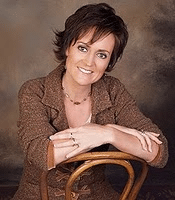 NYT Bestseller, Brenda Novak, donates an amazing chunk of her life to fundraising for diabetes research. She selflessly gives months of her energy, creativity, and what would have been writing time, family time, self-time to her DIABETES AUCTION.
For writers – it’s a warm-your-heart win-win. Bid on one of the hundreds of items, support diabetes research, and you may win an experience that changes your life.
If you’re not familiar with this auction — it’s a gold mine for writers!
My husband and I love to support the Diabetes Auction. With over 1000 donations, if I don’t mention our donations . . . you might miss them.
Yikes – a Missed Opportunity!
Margie’s Donations:
1. A set of six Lecture Packets
2. A 50 page Triple Pass Deep Edit Critique
3. Registration for a Write At Sea Master Class by Margie Lawson on Deep Editing Power, April, 2011. Donation by Margie Lawson and Julia Hunter.
4. A FLYING GETAWAY FOR TWO
You select the destination – any place within 600 nautical miles from Denver.
 A weekend, you and a friend, plus my pilot-husband flying our four-seater plane, me, a night in a hotel, and a two-hour deep editing consult. The consult is on the ground, not while we’re flying. ;-))
5. Registration for an IMMERSION MASTER CLASS session!
A $450 value . . .
 The three-day Immersion Master Class sessions are designed as a personalized, hone-your-manuscript experience focusing on deep editing. The sessions are held in Margie’s log home at the top of a mountain west of Denver. Participants will concentrate on transforming their manuscript into a page-turner. The winner may attend a session in the fall of 2010 (depending on availability), or one of the four sessions offered in 2011.
THE DIABETES AUCTION runs from MAY 1ST to MAY 31ST.
Thank you. I appreciate your time.
All the Best…………….Margie
www.MargieLawson.com
About the author
Margie Lawson—psychotherapist, writer, and international presenter—developed innovative editing systems and deep editing techniques for used by writers, from newbies to NYT Bestsellers. She teaches writers how to edit for psychological power, how to hook the reader viscerally, how to create a page-turner.
Thousands of writers have learned Margie’s psychologically-based deep editing material. In the last five years, she presented over fifty full day Master Classes for writers in the U.S., Canada, Australia, and New Zealand. For more information on lecture packets, on-line courses, master classes, and the 3-day Immersion Master Class sessions offered in her Colorado mountain-top home, visit: www.MargieLawson.com.
 Backstory is the events that happened before your story starts. Your characters need backstory—but your story may not.