Oh, you don’t want your book to totally suck? Huh. Well, maybe this is the right post for you—how to avoid those nine ways to ruin your novel.
No conflict
Even in literary fiction (actually, especially in literary fiction), we read to experience life through the characters. There really is no better way to relate to a character than to root for them, to really understand what they want and need and hope that they’ll get it, to feel defeat at their setbacks and catharsis at their final victory.
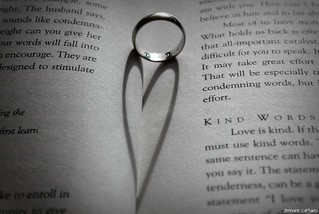 They need to want something, and that something needs to be worthwhile, worth struggling for 300 pages. Conflict is necessary, on every level. Your characters should want something (“even if it’s only a glass of water,” to quote Kurt Vonnegut) in each scene and in the book overall.
Need more conflict? Read more about plotting to add it on a macro level, or tension & suspense to add conflict to each scene and page. Or skip straight to 37 ways to add tension & suspense to your book!
No Emotion
I’m going to be saying this a lot, but readers read to connect with someone else’s life experiences. Humans are emotional creatures, and tapping into those emotions is almost like a powerful short circuit button for authors: show your characters’ emotions so vividly that your readers can’t help but experience those feelings themselves, and you’ll have your readers laughing, crying—and hooked.
Need more emotion? Read more about adding emotion to your novel!
No Effort
Like most people, I can be pretty lazy. Sometimes I hate hate HATE editing, especially the drudgery of scouring my work line by line for every little “JUST.”
Yeah, that’s lazy. Lazy writing can go even beyond that, though: not just using but relishing cliches, the automatic, trite phrases that have been used so often that we don’t think about them and they barely retain their meaning anymore.
Another culprit in this area can be telling—rather than digging in deep to really show what the character’s feeling and thinking and doing, we deliver a distant summary, holding our readers’ at arm’s length (when, once again, they want to experience this character and his life and his feelings!!)
Ready to put in more effort? Learn the difference between showing and telling (or bad telling and good telling)!
Too Much Effort
Wait, what? After she tells us to put more effort into our writing, now she says that too much will kill it? Crap for crap.
Okay, chill. When I say “too much effort,” I mean trying too hard to look like a good writer. Instead, you just end up sounding writerly. Or as agent Ann Collette tweeted in her Today’s Twelve roundup of queries:
#3: Horror. Saleable premise but overblown prose. New authors should try to avoid “Look Ma, I’m writing!” syndrome. Pass.
— Ann Collette (@Ann_Collette) June 21, 2012
And what does that mean? Ann elaborated a little:
@JordanMcCollum For some, it’s a stage. For others? A perdurable affliction.
— Ann Collette (@Ann_Collette) June 21, 2012
Get it? Get it?
How can you make sure you’re not overwriting? Um, some no-nonsense critique partners? (Sorry I’m not more help. It’s a toughie!)
Starting Too Early
Beginning your book long before you begin your story is a major problem. (Beginning too late is less common, but it can be as difficult to overcome. Or not.) Without the conflict to help readers develop that emotional connection to the characters, readers are left floundering, frustrated and . . . bored.
There will be a lot of events that impact your story that happen before the story actually begins. This is called backstory, and you have to be very careful about how you place it in your present story, to inform without bogging the reader down.
Want to get your story going? Be sure to start in the right place, and brush up on backstory!
Not Trusting the Reader
You don’t have to overexplain everything every single time you introduce a new concept (everything) or character or setting or . . . or . . . or. Resist the urge to explain! The exposition of explanation bogs you down, and constantly re-explaining things is frustrating to your readers.
Not everything requires two paragraphs of explanation. Some things are better left mysterious, drawing out the 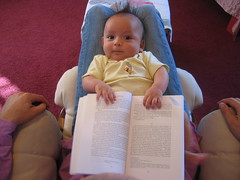 reader’s curiosity. Other things do require a short, simple, direct explanation. And once you’ve explained something, you don’t have to rehash it every two chapters. If you’ve taken such a big detour that readers need the reminder that Agatha was killed and pretty much everyone suspects Agamemnon, your book has gone off the rails (or just gotten on them).
Explaining everything multiple times, constantly bringing the readers (via the characters) up to date on events they’ve already witnessed, and other failures to trust the reader are annoying. Repetition repetition repetition…. See what I mean?
This is a fine line for me, and I have a tendency to go too far the other way. I have a good memory (in general), so pulling facts from several chapters back out of my brain isn’t too hard. That might be a bit much to ask of everyone though.
How can you learn to trust the reader? Again, outside readers are often the best gauge!
Characters We Don’t Care About
Coincidentally, the first syllable of “characters” is “care.” Readers don’t have to love or even like your characters—but they do have to care about what happens to them. For the kabillionth time, we read to experience. Underpinning that experience is caring. Even if we’re rooting for the character to die a thousand deaths, we care. We want to read on. We want more.
But if we don’t care about the character? We don’t really care about finishing the book.
Want to get readers to care about your character? Read more about creating sympathetic characters—even unlovable ones!
Giving Up
The worst mistake you can make with almost any novel is to give up. Your book will never match the glorious vision in your head if you give up. If you want to let little black marks on the page defeat you, give up.
But if you want to be a writer—an author—this is the one weakness you can’t afford. You can fix everything else on this list—I know, I’ve done them all!—but there’s no way to fix giving up.
Just say no to giving up.
Is your persistence flagging? Read more about perseverance in writing and just keep swimming!
What do you think? What are the best ways to ruin your novel?
Photo credits: book heart—Jennuine Captures; baby with book—David Wuertele
 The less tension, the better. Conflict is for aggressive people, and passive-aggression sells books. Besides, everyone knows people read just to enjoy the words you put on the page. Give them more words to mull over, less forward movement and action. If your character wants something, either have him/her give up, or give it to them quickly. Nobody wants to feel compelled to keep reading that way.

 more vivid ways to say things; I love rewriting scenes on the whim of inspiration for something that is much, much better.
 These days, however, my scale is starting to tip towards hate more and more. I think I’m burning out on my latest round of revisions. This will be my third round in two months, so I suppose fatigue is only understandable. But I haven’t written anything new in almost as long (aside from new/rewritten scenes), and that’s something that I really need to do.