narrow slide 4
narrow slide 3
narrow slide 1

Tag Archives: setting

Links to make you think

Some links I’ve come across lately that have made me think:

So I worked in search engine optimization (SEO) and Internet marketing for several years, and I know Google can be daunting. Rick Daley has a good guest post on using SEO for authors. My favorite tips are that you need to go beyond your name and book title. You should be ranking for those anyway! Think about what people who are looking for a book like yours might type in to search. You can use tools from search engines to see if people really are using those keywords or similar ones.

Want to really up your productivity? Check out how one author quintupled her daily output. (via @LuisaPerkins via @AnnetteLyon) I’m trying these methods out and I have to say I really like the idea of making all those tiny little decisions BEFORE rather than DURING the actual writing process.

I’m having a lot of conversations with one of my critique partners about setting lately (it’s something we’re both working on), so when I saw this article on active vs. passive backstory/description tweeted, I had to click. Great examples from published novels, too. (Sorry, I couldn’t find who’d tweeted this in my stream :( .)

Edittorrent blogged about Dean Wesley Smith’s latest article on the history of literary agents and whether we need them today. The comments on Smith’s article lead me to Laura Resnick’s website and her three-part series on agents as well as her article on experiences with the agent-author business model. OTOH, I know lots and lots of people who really like working with their agents—people who are getting big book deals, too. I think the biggest thing I’ve learned is that I’m so glad I don’t have to make this choice right now.

What links are making you think right now?

Do you find this post helpful or inspiring?
Heck yes I do! (1)
Posted in Publishing, Technique | Tagged , , , , | 1 Comment

Setting is people

Setting isn’t just about people, it is people, too. The society which surrounds your characters can provide the setting, and the conflict.

We see this most noticeably in novels set in historical times or cultures unlike our own, but even in contemporary novels set at in our native culture, society can play a role. Our characters’ family, friends, co-workers, etc., can pressure them to act in a certain way. (Don’t your family, friends, co-workers or society at large pressure you to act a certain way? I certainly feel that way.)

When we limit setting to just the scenery, we aren’t taking full advantage of the time and place we’re setting our stories—even if that time and place are so familiar to us that we don’t really notice them. (Which is my problem with setting in the first place ;) .) Also, when we limit setting to just the scenery, we aren’t giving our readers the full experience of that time and place. If we’re lucky, our novels will be widely read even outside of Middle America.

We see this a lot in Victorian and Regency novels, which are so focused on society and its role in life. Modern novels may be more focused on the individual, but no man is an island.

And sometimes the modern and the historical collide…

(And I just found out this was actually made by a friend-of-a-friend for a church activity.)

The movie is actually a semi-serious addition to the post: note how much of a role society still plays. Because, hey, it’s Jane Austen.

What do you think? How have you seen society used to create the setting, or how have you done it yourself?

Do you find this post helpful or inspiring?
Heck yes I do! (0)
Posted in Technique | Tagged , , | 4 Comments

Setting as conflict

In my opinion, the best way to truly make setting a character is to have some conflict for the characters arising from the setting. It may sound specialized, but the setting probably provides opposition to characters’ goals in some form in almost any work of fiction.

In its most obvious form, setting can provide the main conflict of the story, as in disaster fiction. This use of setting always makes me think of movies like Twister, The Day After Tomorrow, or 2012.
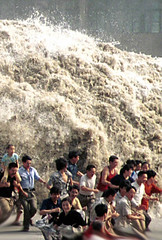
The disaster genre uses setting very effectively on a macro level. A natural disaster—be it hurricane, tornado, earthquake, fire or flood—stands between our heroes and their goals. Often, the heroes’ goal is just staying alive, and, uh, dying really puts a damper on that.

Of course, natural disasters aren’t really characters. They may be the main antagonist in a story, but they’re still no villain. However, we have to establish that the disaster is truly a threat, if not evil (just like with human antagonists). And (also just like with human antagonists), the best way to do that is to show the antagonist in action: someone getting caught by the disaster, or its after-effects or foreshadowing.

Showing the natural disaster’s capabilities can be one form of the other end of the spectrum, a scene-level conflict arising from the setting. This type of setting-conflict is more common, and probably appears in almost any book. It can be something as simple as a traffic jam that makes our characters late for the big meeting.

Sometimes I find myself relying on setting for little conflict like this maybe a little too much, however. A traffic jam or two might not push our readers past their capacity for the suspension of disbelief, but if every time the star-crossed lovers are supposed to meet, the Interstate suddenly backs up, maybe the state DOT should get involved.

What do you think? Do you try to use setting to create conflict? What’s your favorite setting-conflict (that you’ve seen or created)?

Photo by Adam Stanhope

Do you find this post helpful or inspiring?
Heck yes I do! (0)
Posted in Technique | Tagged , , , | 1 Comment

Setting with distant POV

It’s a lot easier to create an emotional response in readers by using your characters’ emotions. But not every scene and not every description is going to lend itself to a character’s viewpoint. Often we see scenes (or books) that start with an almost panoramic view of the setting, as if we’re sweeping through the scene with a movie camera. There aren’t any characters in view, or no characters who can make emotional and perceptual judgments to guide our readers’ responses.

However, we can still use the setting to establish the emotional tone. Instead of relying on a character’s emotional responses and filter to create the tone, we can try to evoke the same emotion directly with the imagery from the scene.

While this technique can be more direct, it can also be a bit more difficult. Manipulating readers’ emotions directly—without getting caught—is a tricky business. (Or maybe I’m just too sensitive—I even resent TV commercials for emotionally manipulating me.)

Obviously, one of the methods you can use to set the emotional tone is imagery. Picking the right image is key, too: focusing on a gray bunny hopping along the forest trail instead of the finger-like, grasping shadows of the trees will undermine the scary tone you’re shooting for. Even if the bunny is important—a “clue,” something you need for later—we have to frame that in the right emotions. Perhaps it skitters nervously down the path, fleeing something unknown, or perhaps we only perceive it as a rustling in the leaves.

Personally, I still prefer using characters as a vehicle for this: by giving them the emotional responses we desire in our readers, we can create those responses more subtly and more easily. But maybe using our characters just helps us to focus our emotional effects, and with care, we can create a tone just as powerfully as we can through our characters.

What do you think? How can we set an emotional tone with a setting, and without characters?

Photo by Hamed Saber

Do you find this post helpful or inspiring?
Heck yes I do! (0)
Posted in Technique | Tagged , , , | 3 Comments

A quick tip on setting (from someone other than me)

I’m not the only one who thinks setting and emotion should go together. Last week, Nathan Bransford linked to some writing tips from author Janet Fitch. And what should we find but this (emphasis mine):

6. Use the landscape

Always tell us where we are. And don’t just tell us where something is, make it pay off. Use description of landscape to help you establish the emotional tone of the scene. Keep notes of how other authors establish mood and foreshadow events by describing the world around the character. Look at the openings of Fitzgerald stories, and Graham Greene, they’re great at this.

Of course, that doesn’t mean that every scene has to begin with six sentences detailing the room, or that a book has to start with a chapter overview on the city it’s set in. It does mean to pay attention to how setting is conveyed. (Like I did with The Cruelest Month, but really, it was unavoidable in that book.)

And I think that using character emotions and perceptions to help set that emotional tone is going to be one of the fastest and easiest ways to create it.

What do you think? How else can we establish the emotional tone through setting?

Do you find this post helpful or inspiring?
Heck yes I do! (0)
Posted in Technique | Tagged , , , , | Comments Off

Setting is about people

Sometimes a setting is so vivid and so involved in the plot—sometimes even becoming an antagonist—that we say the setting is a character in the story. And that’s actually very close to what I think is the truth. No, settings are probably not going to be as dynamic or as influential to a story as your characters will be—but it’s the characters that make the setting.

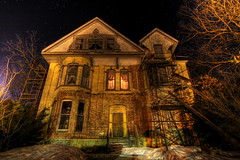
Last time, I mentioned The Cruelest Month by Louise Penny, and a haunted house setting she uses. She sets up some facts and background: people had been murdered there, it stood vacant, they were about to hold a séance there. But those facts aren’t enough to create the chilling haunted house she’s going for.

It’s more than just empirical facts that imbue a setting with a sense of place or make it come to life. Penny also uses emotion to flesh out her settings. To paraphrase characters in The Cruelest Month, this house

  • is the focus of local evil and ill-will, offsetting the good spirits of the bucolic, idyllic village
  • inspires dread
  • has a powerful draw on the characters, despite their dread
  • is the perfect setting for an effort to raise the dead
  • um, is a murder scene. and abandoned. (because the facts do help a little ;) .)

Describing a decrepit old house won’t be enough to inspire a specific response from your characters or your readers. Powerful settings actually have less to do with the location itself, and more to do with the psychological and emotional effect these places have on the characters. As writers, we can almost always access our readers’ emotions best by using our characters’ emotions. Settings won’t have an impact on the reader if they’re not having an impact on the characters.

Tapping into character’s emotions allows us to connect with our readers. In some ways, the setting’s best use can be to create those emotions and set the mood for a scene, drawing your readers in by inspiring those same feelings in them as they see the setting through our characters’ eyes.

What do you think? How else can setting connect with readers’ emotions?

Photo by Shane Gorski

Do you find this post helpful or inspiring?
Heck yes I do! (0)
Posted in Technique | Tagged , , , | 4 Comments

Setting: it’s not about places

I’ll be honest: setting is one of my weak points as a writer. Sometimes I don’t see settings as I envision scenes at all; other times, I don’t transfer enough of the settings I see in my head to the story on the page. (One of the many reasons I need critique partners!) And when I read, I seldom envision more than just a rough outline of a setting, no matter how much square footage the author devotes to the subject.

In fact, the more time an author spends describing the setting, the less likely I am to 1.) be able to picture it or 2.) actually read paragraph upon paragraph detailing the historical and architectural details of a location that will never pertain to the story. (Pointed look at a deceased author who shall remain nameless.) (10 brownie points to anyone who guesses who it is.)

On the other hand, I can’t (and won’t) deny the potential power of settings in storytelling and writing. Recently, I read a book that reconverted me to the power of settings, The Cruelest Month by Louise Penny.

The particular setting that she used so effectively was a house rumored to be haunted. The characters hold a séance there, and they reflect on the people who were murdered there. While those creepy details set the stage for a truly chilling setting, they are not enough to create the full effect on their own. (And we’ll finish that thought next time.)

What do you look for in a setting as you’re reading? How do you convey setting as you’re writing?

Picture by Calvin Piorkowski

Do you find this post helpful or inspiring?
Heck yes I do! (0)
Posted in Technique | Tagged , , , | 8 Comments

Backstory through setting and props

We’ve already covered the two most common ways to convey backstory—narration and dialogue—but this is perhaps the most interesting way to share backstory: through the setting (and props within it). While narration and dialogue can definitely set up the conflict that backstory enhances (or creates), using a concrete setting or prop to do the same thing can ground your characters—and vividly symbolize their conflict.

As editor Theresa Stevens puts it (emphasis mine):

Even though backstory relates past events, it sets the stage for current events. Let’s face it — if it didn’t set that stage, there would be no reason to include it. So perhaps Mark’s purple bathroom becomes important when Grace, his interior decorator, is banned from repainting it. The purple bathroom is symbolic of Mark’s inner landscape, and that’s perfectly fine. In fact, this is how we like it to work: the character’s inner state is made manifest in his outer world.

So think about how your character’s backstory becomes tangible in the physical story world. And then think about how those tangible details can be used as props while the characters are working out their conflicts. This will effectively tie the past to the present in a meaningful way. But one coat of lilac paint is all you need. No need to analyze every bristle on the paintbrush. Present your backstory and return to the present as quickly as possible. You want to sacrifice as little momentum as possible.

Note that this example exemplifies (uh, duh) a great way to do this—it only lets us see that something is up with the purple paint. We don’t stop the story—and interrupt the conflict between Mark and Grace—to spend a paragraph in a flashback explaining Mark’s neurosis. As we read from Chris Roerden last week, “You don’t want to satisfy reader curiosity—you want to increase it” (Don’t Murder Your Mystery, 53).

Editor and author Alicia Rasley (who now writes the blog edittorrent with Theresa, the editor quoted above) says something similar in her article “Backstory Problems“:

Consider how much more dramatic this opening scene might be if Emily unlocks the door of her elegant childhood home, steels herself, walks in, glances around the foyer, sees the chandelier, stops short, and then, resolutely, goes into the dining room, past the table, into the kitchen, and pulling a cell phone from her purse, calls a realtor and says, “I want to sell a house. Immediately. I don’t care how much I get for it.” The readers will be asking, “Wait a minute! It’s a beautiful house! It’s her childhood home! Why does she want to sell it? And if she sells it, why doesn’t she try to get a good price?” On the heels of those questions will come the canny conclusion, “It must have something to do with that chandelier. I wonder what.”

Once you have the readers speculating about the situation you’ve set up, you’ve hooked them. They have to keep reading to get more clues to see if their suppositions are correct.

But if you tell them everything upfront, you might lose the narrative drive that comes from posing the story question, in this case, “Why does Emily want to unload her beautiful childhood home?”

(If the suspense for these two examples is just killing you, check out their full articles for the reasons behind the paint and the chandelier.)

What do you think? How else can the setting and/or props tie in to backstory?

Photo by Alyssa Hill

Do you find this post helpful or inspiring?
Heck yes I do! (0)
Posted in Technique | Tagged , , , , , , , | 1 Comment
  • Come play!

    Jordan McCollum's  book recommendations, reviews, favorite quotes, book clubs, book trivia, book lists  
     
      Authors Incognito

Author photo by Jaren Wilkey
Theme by Jordan McCollum, based on Back My Book Theme by Writer Website Themes, Mandigo Theme by tom and Twenty Ten by WordPress.
All content © Jordan McCollum 2008 - 2012 except where designated otherwise. All rights reserved