All posts by Jordan

X is for eXasperating

This entry is part 6 of 6 in the series bad advice

Surprisingly, not that many X words occurred to me 😉 .
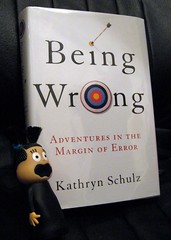
I sometimes feel like I’ve received more than my fair share of bad advice on my writing. (This probably isn’t true, but it still feels that way.) From people who seemed to be half-reading what I wrote, and half just making crap up, to people who were obviously trying to teach me a lesson (which no one else who’d read it seemed to see), from those who were trying to remake my writing to sound like theirs to those who could tell me I was breaking writing “rules” without apparently understanding what the rules were for in the first place—and my personal fave, the person who killed off my killer in the opening scene—sprinkled among fabulous advice from insightful readers that has and continues to help me improve my writing, I’ve gotten an awesome sample of how not to be a critique partner.

Unfortunately, that doesn’t necessarily make it easier to 1.) tell good advice from the bad, or 2.) move on from well-intentioned but wrong-headed advice. Even when I have great, enthusiastic responses from critique partners to comfort me, some words still chafe.

Even more frustrating than the feedback is my tendency to dwell on it. When I’m faced with this, I try to tell myself a couple things:

  • Does this bother me because I agree with it on some level? Then how can I fix it?
  • This person isn’t omniscient. He might not even know what he’s talking about.
  • What does the majority say? Look over the feedback I’ve received from others to see if there’s anything directly addressing this issue.
  • What does my experience say? Does this advice work for me?

And then I go to my wall o’ praise: the spot where I’ve taped up pages of nice things people have said about my writing.

What do you think? How do you handle critiques or advice that just BUGS you?

Photo by Elyce Feliz

W is for wacky words

I love my kids, and I love words, so it probably goes without saying that I love my kids’ words. My favorite is when my small children suddenly use large words. Among other favorite phrases, my two-year-old daughter has started saying “Acksee . . .” (actually). But I think the most surprising recent words were this:

Last night at dinner, we were talking about our visit with Nana (my mom). I asked my son Hayden what his favorite part of the visit was. He decided his favorite part was getting new blocks from Nana.

“Here’s the backstory,” he said. And he proceeded to explain in great detail the shopping trip a week ago when we bought the new blocks.

Even a five-year-old can understand backstory! (And we’ve talked about backstory before—for a whole series.)

What do you think? How often do you use backstory?

V is for Voice

Agents Suzie Townsend and Joanna Volpe are doing “First Page Shooter” on their blog—participants submitted their first page and the agents are giving feedback on them. And FPS#3 (by Josin McQuein) hits it out of the park with voice. The first line:

Killing someone’s easier than you think.

It’s amazing how different that is from:

It’s easier than you think to kill someone.

Or

It’s easier to kill someone thank you think.

Okay, so maybe people in the publishing industry are the only ones who’d notice the difference, but each line seems to say something different about the speaker.

What do you think? What kind of person writes each of those?

Photo by Douglas Walker

U is for Ugh!

Everybody’s gotta start somewhere—and sometimes it’s fun to celebrate how hard you’ve come. Fellow crusaders Sierra Gardner and Clarissa Draper and I have concocted a sensationally bad beginning to a mystery, making as many newbie mistakes as possible. Sierra is soliciting comments on what we did wrong in the passage—but I’d like to hear how we could make it worse!

It was a dark and stormy night. The spiders were advancing up the drive, ready to attack. She couldn’t move, couldn’t breathe. One eight-legged creature began to crawl up her leg and shake its pincher’s at her face. No, she said in a silent scream. The spider continued to advance, closer and closer to her face. Just as the spider was about to bite into her neck, an alarm sounded. Sandra awoke with a start and lay in bed and listened to her alarm clock ring.

Her phone rang.

‘Hello?’

‘Hi, it’s me. How are you?’

‘Oh, I’m fine. What did you do today?’

‘I don’t want to talk about that right now, I want you to come over, it’s important, Sandra. I fear for my life and I have some important stuff to tell you.’

‘Okay, I will be there soon.’

As Sandra walked drearily up the sidewalk to the white picket fence colonial with blue shutters and budding daffodils in front, she noticed with surprise that the door hung slightly ajar. Immediately alarmed, Sandra crept forward, her legs stalking forward gracefully like a leopard moving stealthily toward it’s prey.

Whoever broke into the house wouldn’t know this, but Sandra had been teaching martial arts for years. Her father had insisted that no daughter of his would go out into this scary world unprepared to defend herself. Over the years her training had paid off, keeping her safe when her job as a police officer put her in harms way. Yes, Sandra was confident. She was more than a match for any drug crazed young punk who thought he could make a quick buck by nabbing her HD television and pawning it at the local dive down the street.

Sandra barels through the door with a flying high kick with her foot. A movement in the pitch-black dark startles her and she falls down. I jump to my feat and call out. Nobody answers, so I jump on the moving lump.

“Ouch! Sandra, it’s me your father!” “My father?” I slid to the floor. “What are you doing here from Baltimore?”

I couldn’t remember the last time I saw him except when he was trying to get me to test for my third dan for my blackbelt but I didnt want to because I was only fourteen and I hated how much martial arts was taking over my life. Even though now I’m pretty glad I did it because it did help a lot, but I didn’t know that then and dad didnt even try to listen to me. “Sandra, you’ll thank me one day,” he kept saying, but the instructor didn’t agree even after I’d broken his nose, though I didn’t mean to he just got in the way. I told him to be more careful even then I didn’t know my own strength so dad was lucky i didn’t hurt him worse even though he had fifty pounds on me.

“Dad, what happened to you? Is everything okay? Why are you on the floor in a lump?” Sandra said with worry ringing through her voice with clarion clearness.

“You missed him Sandra. He took everything, including….”

With a dramatic gasp her father took his final breath, his head falling backward and his tongue lolling out grotesquelly. Only then did Sandra see the pool of blood, the red life fluid seeping from his body onto the expensive italian tile.

It was tough to write this—but at the same time, it was nice to realize how far I’ve come (even though I have a ways to go yet!).

What do you think? How could this get even worse?

T is for thinking creatively

I’d come up with this idea a while ago and couldn’t quite figure out what I was going to write. But I did keep seeing awesome posts on creativity in writing coming up in my feed reader.

And then it clicked! One of the courses of DIY MFA 2.O is Craftivity: creativity in writing craft. So check out the posts so far for great ideas on tapping into different avenues for creativity!

S is for Show Not Tell Crusader Challenge

This entry is part 13 of 14 in the series Emotion: it's tough

It’s the last challenge of the Crusade! Here are the rules for the Show Not Tell Crusader Challenge.

And here’s my entry, flash fiction in an urban fantasy setting:

The footsteps echoed in the empty canyon of a city street—more than just my footsteps. I stopped short. The footsteps behind me stuttered to a stop, too. The hairs on the back of my neck stood at attention. The feeling of being watched was as palpable as the brick wall next to me. I caught hold of the rough bricks to steady myself as a current of ice shimmered down my spine.

Though I willed myself to stare at the sky blazing orange, not to give into the terror, I glanced back. It was hard to make out his features in the fading light, but his gaze clearly swung away from—and right back to—me in a sharp, saccadic shift. Tall and unnaturally gaunt, in a long black coat, he gave substance to the shadowy nightmares that had plagued me.

I licked my lips, the salt from my sweat a cruel joke to my empty stomach. The man stepped closer, his eyes still flicking back and away over and over. A sharp, acrid scent filled my senses, a mix of panic, sweat and decay.

I ran.

Hm. Wonder how it ends!

Photo by Kelly Teague

R is for Revision

I’m gearing up to do the first round of revisions on my WIP. I totally don’t have a system for revision (yet?). I’d really like to do have a set of steps I follow for revisions—instead of still making plot-level cuts and additions two years after I should have!—but I think I just might not be that kind of person. I mean, I can be really faithful about using a datebook, but only for a couple months. The last two months of each of my children’s baby calendars are a major challenge. (Oh wait… Gotta update that!)

Here’s what I do/have done—and I use at least three of these methods at any given time:

  • Make running commentary notes as I’m writing in comments or square brackets.
  • Keep a list of changes I want to make in another document.
  • Keep a list of changes in a sticky-note.
  • Write down ideas on any available slip of paper.
  • Email myself ideas, notes and changes.
  • Reread the completed draft, where I’m only allowed to make notes/comments. (And fix typos.)
  • Complete the exercises in one or more of Donald Maass’s books.
  • Send to alpha/beta readers.
  • Read more craft books.
  • Take time off.
  • Write down character exercises on any available scrap of paper.
  • Talk over potential changes—mostly with myself, since it takes too long to explain everything to give someone else enough context to respond.
  • Lose and/or toss a good proportion of the notes.
  • Print off the entire book and read it aloud, chapter by chapter.
  • Margie Lawson’s EDITS system.
  • Start over at step 1.

Each of these methods can be effective. But still, if this looks like a mess, that’s because it is!

This time around, I’m trying to focus on the plot- and character-level fixes I need first. I went into this book not sure of my characters’ voices (apparently I did something right, though!), or even my characters themselves, and with a plot that was a lot less defined than I usually like. I know the big things I want to improve, but I’m trying to figure out if there are other things I need to fix now (before I get into the more wordy-level things).

I know some people are much better at going about this systematically, and I want to learn from people like Jami, Natalie, and Suzannah. It seems like they have such great “systems” for revising, attacking each problem in order, and they’ll never miss anything. Okay, so that last part is probably just wishful thinking on my part, but wouldn’t it be nice if we all had a single system we could work through with our first draft to make it into something we can really work with?

What do you think? How do you revise?

Edited to add more posts on systems of revision (partially for my own reference): Five types of edits from the QueryTracker blog.

Photo by Joanna Penn

Q is for Questions

Questions can be a great way to get ready to write. We looked at some character questions last week. This time, I want to look at my favorite idea/plot generating questions.

  • What if . . . ?
  • How could X happen?
  • What would it take
  • How can this be more? Do I have any other ideas this would combine with well?
  • What’s the worst thing that could happen?
  • What does this character want?
  • What kind of person would want/not want this?
  • What else is going on in his/her life?
  • Who is the least likely suspect?
  • Who would be the worst/most painful person to do this to the protagonist?
  • Why would s/he do such a thing?
  • How can I get A to do/want/say Q?
  • What other part of the story can I tie this to?
  • Who else is in play here?
  • How can this character have a subplot that parallels the main plot?
  • What else can go wrong?
  • How can I make something go right, but at such a wrong time that it just makes everything worse?
  • Who else is out to get them? Why?
  • What else is going on in this setting? How can that tie in?
  • Can I make things worse?

Sometimes, I find myself just answering these questions subconsciously as I plot and write, but usually I can trace my thought process back through the questions I asked myself to get there.

What do you think? What kind of questions do you ask yourself when plotting?

Photo by Gillian Maniscalco