Craft books: Writing the Breakout Novel

This entry is part 2 of 5 in the series Writing resources

by L. Jagi Lamplighter

My favorite book on how to write is Writing the Breakout Novel, by Donald Maass. Before encountering it, I was a non-believer. Writing books did nothing for me. Most seemed to be filled with an endless list of what not to do.

But something impelled me pick this book up . . . and everything changed!

Donald Maass is a top New York agent. He reads hundreds of manuscripts a year, maybe thousands. One day—perhaps dazed by the endless mountain of manuscripts he had to scale to reach his desk every day—he began thinking about the phenomena of the breakout novel.

A breakout novel is not the same thing as a bestseller. A bestseller is a book that sells enough to make it onto the New York Times Bestseller’s list. A breakout novel is a novel that sells far more than anticipated. It might be a bestseller, or it might just be a book that was expected to sell five thousand that sold twenty thousand.

The significant thing about breakout novels, however, is that most of them do not get a lot of time or money put into promotion. Which makes sense. No one expected them to do well. But it means that their popularity came almost entirely from word of mouth.

And that is the ultimate compliment a book can have—that it sold well just because people who liked it told other people.

Maass’s question, as he looked nervously up at the tower of papers tottering over his desk, was this: Is the success of these breakout novels due to chance? Or were they actually better than other books?

So, he went out and bought himself one hundred recent breakout novels, and he read them.

And, guess what? They were better!

Which led him to another question: What made them better? What did these books have that so many of the manuscripts piled in the mountain looming over his desk lacked?

This search led to his book, Writing the Breakout Novel. Its success led to him teaching a workshop. He wrote up many of his exercises into a second book, the Writing the Breakout Novel Workbook. (He has since published a third related work called: The Fire in Fiction.)

In his work, Maass identifies what these books do that make them different: engrossing story, enchanting characters, enthralling pacing, enduring themes. Then, for each point, he shows how they do it. Giving examples and exercises that help the writer bring out similar strengths in their own work.

He identifies particular techniques for raising the stakes, for heightening emotions, for bringing characters to life. He also discusses the importance of them and identifies the two themes that resonate most with readers.

Reading his work entirely changed my fiction.

Nearly all of Maass’s work is useful and insightful. Of all Maass’s exercises, however, my favorite is the one on page 64. (This is the villain’s version, but is just as useful for protagonists. I picked it because it is concise—having all the character exercises together in one place.) In it, he urges the writer to note the main quality and goal of their character. Then, to chose an opposite quality and goal. (I find that ‘contrasting’ or ‘opposing’ often works better than opposite.) Then, write a scene in which the character demonstrates the opposing quality or reveals the contrasting goal.

This simple exercise can raise a character to a whole new level, catapulting one-dimensional characters into two-dimensions, and two-dimensional characters in to well-rounded three-dimensional ones.

How does this work?

In art, contrast and shading is what gives an object the appearance of three-dimensions. In writing, it is the same thing. Real life is a jumble of conflicts. We want to save money and buy that new vacuum. We want to move to the location of our dreams and stay near family. We want to admire our cake and eat it, too. These internal struggles are always with us, tormenting and compelling us.

When characters have similar struggles, we innately recognize it as like life, the same way that our eye is fooled by a little dark paint into believing that the shaded side of the bowl of fruit is farther away from us than the brighter side, because it reminds our eye of real shadows on real red glass bowls.

This is only one exercise of many that really brings one’s fiction alive. Another favorite is to take a moment and to pull it out of time, pausing to remind the reader how the past (last year, last month, ten minutes ago) is different from the present—how the character has changed in the intervening time. It is a wonderful trick for heightening the emotional impact of a scene and for drawing out the implications of your characters experience.

These examples are only two of many, many excellent points. His book can be used like a practical reference manual. Stuck? Not sure what your scene needs next? Open the Writing the Breakout Novel Workbook and flip through it until one of the techniques included leaps out at you, sweeping away your writer’s block.

So, as I mentioned, Writing the Breakout Novel is a book that helps the writer know what to do, instead of just what not to do. I found it so useful, I went and took his workshop in person, which was also very helpful.

Armed with Maass’s insights, I entirely revamped my novel and finally made the long-dreamed-of jump from the looming, teetering submission pile to the shelves of my local bookstore. You can, too!

About the author
L. Jagi Lamplighter is the author of the Prospero’s Daughter series, beginning with Prospero Lost. Her short stories have been featured in several science fiction, horror and fantasy anthologies. She also enjoys romance and anime. She blogs at Visions of Arhyalon.

Getting resourceful

This entry is part 1 of 5 in the series Writing resources

While we like to hear stories about prodigies and untaught geniuses who magical write perfectly poetic prose (and always on the first draft!), the reality is that for pretty much everyone, writing takes a lot of practice, effort, time—and learning.

Writing resources are really important in that learning process. Everything from craft books to conferences can help us improve our writing craft (not to mention learning about the the business side of publishing). From the mechanics of writing to story-level technique, writing resources can help us every step of the way.

And yet sometimes, it’s still hard for us to take that help—for me, it’s often either the expense (of money and time—I’d rather be writing!), or debating whether I really need to work on that area (answer: probably). Can’t I figure this out on my own? Shouldn’t I?

Maybe, maybe not. No, a critique group or a class can’t teach you how to write—at least not if you’re not willing to listen and learn and try new things, and apply them in your writing. But finding those new things to try, identifying your weaknesses and finding ways to improve them all take a lot longer (and may not be as effective) if we don’t seek that outside help.

So this week, we’ll be looking at writing resources, and how they’ve helped us learn and grow as writers!

What writing resources have helped you in your writing journey? (If you’re interested in joining the series with a guest post, I still have openings!)

Photo by Fabrice Clerc

Do you have any sacred cows? (Go fish)

Do you have any sacred cows? No, I don’t actually mean holy cattle—you know the cliché: something you absolutely cannot sacrifice.

We may be flexible about a lot of things in our writing—or not. During the various stages of development, we may be attached to certain characters or events or even words that we just refuse to part with in later drafts.

Until we take our perfect (or pretty good) little baby out into the bright light of scrutiny and let our critique partners and beta readers tear into her. Sometimes an innocent little comment (“this doesn’t feel like the right word”) can feel like a full-fledged attack when we’re so attached to that word.

But eventually, we often find that after a little time and thought, it’s not really as important as we thought—maybe it’s not the right word, or maybe the connotations aren’t what we’re going for. Maybe this character really is redundant. Maybe this event isn’t quite as critical as we thought—after all, they only accomplish X and couldn’t we put that in this scene . . . ?

And sometimes, no matter how much we think about it, there’s nothing we can do to “fix” it—or nothing we’re willing to do. This might be because our CP hasn’t seen our whole or latest draft, so they don’t know the full significance, or it might be a theme they didn’t notice. Or it might be an irrational attachment.

Sometimes we’re advised that there are no sacred cows—we should be prepared to change any- and everything in the quest to create the best book (and/or get published). But I wonder if being willing to lose everything is really the best route to create a better book.

What do you think? Are there really NO sacred cows? Are there things you absolutely could not change, even if it meant the difference between a million-dollar advance and bubkis?

Picture by Gamerscore Blog

You’ve done your research

Yesterday, I shared some of the random facts I learned about Irish culture (and pseudo-Irish culture) in researching one of my characters. Call me weird, but I love research. I loved learning more about Ireland and its culture and language, as well as the other topics I had to learn about in writing my book (including the Catholic church and the FBI). (Oh, and having a brother. I had to research that, too—I only have sisters.)

My favorite resource for research is, of course, the Internet. Yeah, we’ve already talked about how cool the Internet is this week, and I’m sure you all know, so I don’t need to remind you—but man, that’s a lot of free resources.

However, I also read at least half a dozen books for research as well (some bought, some received as gifts and some from the library), and consulted several others. Crazy as it may sound, I also talked to actual people—a friend who’d lived in Ireland, a friend who had a brother. I had my work critiqued by people with intimate knowledge of the subjects.

Of course, we have to be careful—too much research and we might tend to try to cram it all in there, whether it furthers the plot & characters or not. (“You’ve really done your research, and it shows,” may or may not be a compliment 😉 .)

I think I’ve also been exceedingly lucky in doing my research—often, I discover something that inspires a scene or is a perfect fit for something I needed in my manuscript. Experiences like that could convert any writer to the research!

Do you like research? What’s your favorite source for research? What’s the most interesting thing you’ve learned in researching one of your books? (Mine is how to build a certain kind of explosive device, which I do not have any intention of actually doing.)

Photo by Kate Andrews

St Patrick’s Day myths

I have to confess: secretly, I have Irish ancestry.

Okay, it’s not that big a secret. But for some reason, it’s not that big a deal, either—I also have Danish, German, French, English, Ulster Scots and other ancestry, and I don’t get a parade for that—and I also recognize that being (technically) Irish-American doesn’t mean I know jack squat about Ireland and its culture today.

Or, I didn’t until I wrote a book with an Irish protagonist. And no, not Irish like you and I are Irish—born-and-raised-in-Ireland-until-adulthood Irish. And surprisingly, although we allegedly speak the same language, that entailed the same amount of research as any other character from another culture might.

So here’s some of what I learned—a few St. Patrick’s Day myths for you.

Myth: St. Patrick’s is the quintessential Irish holiday

Well, St. Patrick is a pivotal figure in Irish Catholic history, but not a whole lot is known for certain about him. He was a Briton taken into slavery in Ireland, escaped after six years and returned to Britain, then entered the Catholic church and returned to Ireland. He is the most famous of three patron saints of Ireland (although technically he’s never been canonized by a pope). Legend says he banished snakes from Ireland and used the shamrock to teach the concept of the Trinity.
March 17th is his feast day and has been celebrated as a day of holy obligation (and a day off from Lent) in Ireland for centuries. However, the first recorded St. Patrick’s Day parade was held in Boston (1737—the first parade in Ireland was nearly two hundred years later, after dozens of American cities had established parades of their own). St. Patrick’s Day is largely a holiday celebrated by the Irish Diaspora—people of Irish descent not living in Ireland. In fact, it wasn’t until the 1990s that Ireland began capitalizing on the tourism possibilities of the “traditional Irish holiday.”

Myth: Corned beef is the traditional Irish meal

Good news if you don’t care for the stuff: corned beef isn’t a traditional Irish meal. However, if you like it, the reason corned beef didn’t catch on in Ireland is doubly depressing: most Irish people couldn’t afford beef.

The tradition, like that of St. Patrick’s Day, is largely Irish-American: once they came to America, Irish people could afford beef and prepared it as they would have their cheaper meats back home. (I have no idea how people too poor to afford beef bought passage to America—details, details.)

A more traditional Irish meal would feature uncured bacon (Canadian bacon)—but do we really care?

Myth: In Ireland, everyone speaks “Gaelic.”

In Ireland, the vast majority of people call the traditional language “Irish.” While everyone in the Republic is required to learn Irish in school, few people actually speak it outside of school. (Think about it—when’s the last time you used your high school French? How good is it?)

There are a couple areas in Ireland where Irish is the native language: a few areas mostly on the west coast called the Gaeltacht (gale-tacht, with a ch like in Bach or loch). Population: 91,000, or about 2% of Ireland’s 4M+ people.

A fun fact: the Irish police force, the Garda Síochána (guard-a she-chòn-uh), requires at least a passing level of Irish proficiency for prospective officers (though they reassure applicants that it’s really not that big a deal).

Myth: Nice accent—are you from Scotland or running for the next Lucky Charms mascot?

Good try. You got one of the British Isles. Now, here are your study materials: Father Ted. Ballykissangel.

A couple hints: saying “I’m oyrish” means you’re probably not, “dinna, canna,” etc. and trilled r’s are waaay more common in Scotland that Ireland (though if you look really hard, you can find Irish accents that have one of those features, but not all).

(How do you get it right? The easiest way is to pick a specific place in Ireland for your character and find recordings of someone from there, or vice versa. And unless your character lived in Ireland past age 8 or so—even if their entire extended family is Irish—they probably have an American/Australian/Canadian/wherever they’re living accent. Linguistic phenomenon.)

Myth: Okay, then, Irish people speak English like the rest of us.

Uhhh yeah. They use many of the same words, but . . . well, let’s see if you can tell what this means:

“Did you hear that the scrubber and the wagon were plastered last night and ended up in a mill? It was deadly!”
—from The Feckin’ Book of Everything Irish

Oh, you did know that meant the woman of low sophistication and morals and the unattractive woman were drunk last night and ended up in a fight (it was awesome!)? That’s a lot of cheek, ya cute hoor—have you the knees to go with it?

Myth: The kilt is the best way to show off your Irish heritage

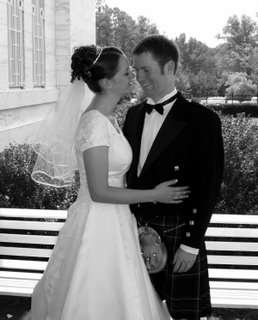
Your knees, yes. Your Irish heritage, not so much. In Ireland, you’re most likely to see kilts on pipers. Really, the kilt is a Scottish tradition (and even then, the length of that tradition is disputed). Although there has been a bit of a movement to adopt it as Gaelic national dress (and what have you), the Irish kilt is mostly a phenomenon celebrated outside of Ireland.

(And in case you’re wondering, it’s not like everybody in Scotland’s wearing one, either. During the two years my husband lived there, he’d see someone about town in a kilt perhaps weekly.)

Myth: Erin go bragh is a Gaelic Irish phrase that means . . . uh . . .

Erin go bragh is the Anglicized version of . . . well, Irish speakers aren’t totally sure, but most seem to think it came from the Irish Éire go Brách, which literally means Ireland until eternity.

And, once again, it’s not that popular in Ireland. Sorry. It was used as a slogan a few centuries ago—is that better?

Myth: there’s nothing that’s really Irish about all this celebrating, is there?

Absolutely! In fact, St. Patrick’s Day is a great time to celebrate the way Irish culture has adapted during the Irish diaspora—because Ireland’s greatest export is its people.

And the other stuff that’s “really Irish”: potatoes, Catholicism, beer, Irish whiskey, shamrocks, the color green (and orange!), Brian Boru’s harp, Irish dance (though not necessarily Riverdance), Halloween (Oíche Shamhna (ee-chah how-nah)). Yes, it’s all cliché but still so true.

Check out Annette Lyon’s Word Nerd Wednesday to find some other Irish influences—on the English language. And my friend Stephanie Black actually lived in Ireland for a few years, and she’s posting about Irish chocolates and pictures (of Ireland, not the candy) today.

What do you think? Any surprises? Totally rethinking your national identity now?

“Brainedness” and plotting

I recently took one of those half-brained quizzes. Er, um, right-brain/left-brain quizzes 😉 . I was a little surprised at my result (though my husband guessed what I was right off the bat. Go figure.).

There are positives and negatives to both sides. Traditionally, left-brained people are the analytical and logical. Right-brained people are the “creative types.” Personally, I didn’t want to be left-brained—who wants to be characterized as someone completely devoid of emotion and creativity?—and I didn’t want to be right-brained—who wants to be seen as flighty and incapable of reason?

Thinking about all this got me wondering whether “brainedness” had anything to do with whether or not you plot your stories in advance. Are right-brainers less likely to plot? Are left-brainers more likely to? So, I’m asking you:

Because the quiz I linked to always gave a “whole brain” 16/16 result, I reset the poll. Please answer again, and if you need to, here’s a quiz that gives real results.
[polldaddy poll=2913896]
Click through to take the poll!

(If you’re not sure where you fall on the brainedness spectrum, this quiz—that quiz is rigged, try this one only takes a couple minutes. On the plotting spectrum, I tend to be quite generous—if you’ve written down a plan for the course of your story with specific events, even if you don’t follow it or the events aren’t super specific, I consider that plotting.)

What do you think? Did your results or the poll’s results surprise you?

Introduce yourself!

This weekend, I attended three events for a total of five author friends. It was great to see my friends and celebrate their successes, and I even won a door prize at one event.

But the thing that really surprised me wasn’t the fantastic turnout or the yummy snacks—it was the people I met. At these events, I met a member of one of my critique groups, a person I know from an Internet mailing list for writers, and an admitted lurker here on this blog.

I shouldn’t be that surprised (I’ve only been online more than half my life) (in years, not hours) (though it may be getting close there 😉 )—but it really hit me how much the Internet is bringing us together. (Not to mention the fact that three of the four authors I was visiting I met through the Internet and that I saw half a dozen other people that I knew, knew by reputation or knew of their sites at these events.)

We may not get the chance to meet in person any time soon (heck, or ever), but I’d hate to let the opportunity to connect pass us by. Whether this is your first time or your fiftieth, please feel free to introduce yourself in the comments. Let us know what you write, tell us about your latest project or success or sob story, ask questions (I may not have all the answers, but someone out there might!), look for friends or just say hello.

To quote The Who (and who doesn’t love to quote The Who?), “I really wanna know—c’mon tell me, who are you?”

(Also, feel free to add me as a friend or follow me on any of the social sites linked in the sidebar—but do include a message so I know you found me through the blog, and aren’t just a crazy person.)

Photo by ThinkPanama

Stealing words

I think we’ve all been at least a little tempted. We’re reading our favorite author or the latest, greatest novel and we see a beautiful phrase that perfectly expresses an action we use in our story. It’s lyrical and fresh and captures it clearly and succinctly. We’re so happy we don’t have time for writer envy!

Can you use those words?

Well, sure. If it’s something short enough and common enough, it may not even be that big of a deal. I came across the phrase “swallowed a sigh” in a book and adopted it to change up with “sighed inwardly.” It’s short, expresses a common action and is plain enough that I doubt it matters where I saw it first. (In fact, I’d be surprised if that author hadn’t read it somewhere.)

But, of course, you can’t plagiarize whole scenes or paragraphs. No. Bad. Don’t.

Lately, though, I’m noticing such great, fresh descriptions that I want to steal bits and pieces of them all the time (or maybe just collected them in a book). Of course, if I do that, the line won’t be as fresh in either book—and I’m just taking that line one step closer to a cliché. It would be ideal, of course, if I could come up with something equally good and fresh and creative (or better)—but now I’m being influenced and intimidated by that phrase.

So where do you draw the line? When is it okay to steal/”adopt” a phrase for your work?

Image by Michael