A couple weeks ago, on two different editing blogs, professional editors gave some tips on creating stronger sentences and more vivid writing. The tips were quite different, but I found something a little disturbing about the comments. Here’s an example (synthesized):
Yeah, that’s nice, but my characters have a ‘voice’ and that voice is more important than writing well.
I am all in favor of using character voice in writing narration. I’m sure we can all cite examples of memorable writing in a character’s voice that used incorrect grammar, etc.
But at the same time, there was something more to that character than just the fact that she used “ain’t” or no apostrophes or no perfective tenses. A character’s voice isn’t memorable because you break the rules, it’s memorable in spite of that.
A character’s voice is not memorable because it’s ordinary. As editor Maryann Miller advised:
A writing instructor once told me to pay attention to how people interact when they talk, but don’t necessarily use exact words you hear in a conversation.
When it comes to working with a client, I try to encourage them to rise above the ordinary in what they are writing.
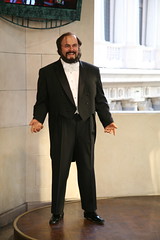 Would you want to sit through an opera with someone who can kinda sing? We might tolerate it, but if someone can really sing, it’s a pleasure to listen to them for three hours—or 300 pages. Heck, there’s beauty in untaught bluegrass—but that doesn’t mean everyone who tries it is worth hearing. (Animals make noise, too—does that make them all worth listening to?)
The practices that these writers claimed were “damaging to my voice” were anything but—one was to avoid limping to a conclusion in a sentence and one was to avoid five common cliches/repetitions. Personally, I don’t know anyone who feels that cliches and weak sentences express who they are in their writing. If anything, they undermine the message.
I said this in the comments to one of these posts: The more I think about it, the more I think “but that’s how my character would say it” can be an excuse not to revise. I should know, I use it too.
And, frankly, the changes discussed weren’t substantive. One example: “He took her to his childhood home” as stronger than “He took her to the house he grew up in.” Another was “he nodded” instead of “he nodded his head.” Really? We’re going to claim that those differences—insignificant in the actual word choices, not adding obscure vocabulary or jargon or imagery—are affecting how our character’s voice is expressed? If those defines your character’s voice, methinks this character—and by that, of course, I mean us, the writers—needs to try a bit harder.
That might be how the character would say it, but if the character got another chance (or ten) to look at it over again and revise it (for publication), is that how he’d still say it? No, he may not make it poetic and beautiful and use words and images he doesn’t know, but that doesn’t mean he’d leave a mushy sentence there and allow it to undercut his meaning or make him boring and ordinary.
What do you think? Is “voice” a defense for mushy writing? Can prepositions and repetitions actually define character voice? (And tomorrow we’ll talk about the exact opposite: when writing well gets in the way of voice!)
Photo credit: Cliff






 James Scott Bell highlights one reason why these elements are so important: “Modulating tension is one of the keys to writing fiction” (
 looking at my own work.