I just spent 2 hours writing a loooong kinda ranty post about commas—when I realized I was supposed to start the site critiques Monday. So let’s get started on that one, shall we?
Website critiques begin ASAP. Sorry!
I just spent 2 hours writing a loooong kinda ranty post about commas—when I realized I was supposed to start the site critiques Monday. So let’s get started on that one, shall we?
Website critiques begin ASAP. Sorry!
I’m Jordan and I’m a writer who doesn’t have a muse. And I’m okay with that.
It seems like most writers, and other “creatives,” have a muse—an imaginary personification of their creative capacity. When “the muse strikes,” it’s time to write. When the muse kicks off for the day/week/year, we’re out of luck. It seems like the 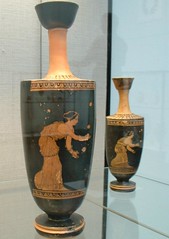 only time I hear about a muse is when it’s not doing its job:
Having a muse does alleviate some pressure to create (something I think I learned from Elizabeth Gilbert’s TED speech?). It can be draining and stressful to have to come up with everything yourself. If you’re stuck for an idea, dwelling on that fact can make you feel even less creative and more pressure to come up with something.
Maybe it’s pride, but I actually like coming up with ideas myself, or brainstorming with others. I like to think of myself as creative—and good enough and smart enough (and gosh darn it, people like me) to come up with solutions to my problems and ideas I can’t wait to write about. For the most part, I rarely disappoint myself—though it can be a little bit of a struggle when I’m burned out or just taking time off.
I think the biggest problem I have with muses is this idea that we’re abdicating the responsibility and the ability to create ourselves. Clearly not everyone with a muse does this, but some people use the muse less as a tool to encourage creative freedom and more as a slave driver.
As I said a few years ago in comments on a friend’s blog,
I think true genius is one that can still function as a normal human being while mastering his or her art. Those “geniuses” who ditch other people for their labs or their tablets because their fickle muse strikes them momentarily are at the mercy of capricious bouts of insight.
[The person she quoted] seems to be buying into the “genius is the ability to write pure, unmitigated, beautiful truths to power as they flow ceaselessly from my pen—while the muse lasts” school of thought.
For probably 99% of people, however, genius is the stroke of artistry that manifests itself while you’re trudging along—whether that trudging is through the other 70,000 words of your manuscript or through 70,000 diapers. “Genius” and talent, even taken together, rarely go anywhere without hard work, discipline and dedication.
What do you think? Do you have a muse? Is s/he a slacker, or does s/he work as hard as you?
Photo by Happy A
Right now, I’m dragging myself through a book. It’s supposed to be really good, but personally, I despise the main characters. They’re too perfect. Their lives aren’t perfect, but the bad stuff that’s happened to them is presented in a way that makes them victims instead of strugglers with strength.
Ugh. Just thinking about it gets me all het up again. Let me just give you a bulleted list as to why this wrong, immoral and bad.
In a romance, we don’t have to hear about every person the main characters have ever dated, and every bad date they’ve ever been on. In a mystery, we don’t have to have the hero’s case-solving track record presented in full color. In any genre, we don’t need a character’s life story the first time we meet them (this drives me nuts!). We just need to know what’s pertinent to the story. There is a better way to deliver backstory!
In fact, Livia Blackburne did an in-depth analysis of some comparable titles to her work to see how they handle backstory in the first chapters. Surprisingly, both Graceling and The Hunger Games deliver big chunks of backstory that early in the novel.
However, I think the key is how they do it, and what they choose to include. Livia catalogues each line of backstory from those chapters, including flashbacks. The backstory:
 Agent Rachelle Gardner has a great post about choosing and using backstory:
When you’re bringing your reader into the world of your novel, you’re trying to engage their senses and their emotions right away to get them involved in the story. You need to make an emotional connection with the reader as quickly as possible. The way to do that is in the here and now, the action and dialogue taking place in the present time. It’s highly unlikely you’ll make an emotional connection through backstory. . . .
There are ways to bring the backstory into the book, and the key is to do it slowly. Think about giving just enough information to illuminate one tiny aspect of your character at a time. Place your characters in situations, let them react, and let your reader wonder how they got there and why they reacted that way. You want to be strategic, almost cunning, in the way that you let little bits of information from the past appear on the page. Use those pieces of backstory to slowly and carefully flesh out that character, never giving away too much, always leaving the reader guessing a little.
I worry that in the past I’ve come down too hard on backstory. It’s useful—really!—but in many cases it’s more useful to writers than to readers. You know that lady that corners you and makes you look at photos of all seventeen grandchildren? Don’t be that lady when it comes to backstory!
What do you think? How have you seen backstory done well?
Image credits: history—Kristian Bjornard, applause—Jonathan McPherskesen
It’s no secret I’ve been flirting with burnout. I’m halfway through the very first revision (i.e. the major work of fixing the story problems, and the frustration of not always knowing how to do that and still working in a vacuum).
 But I know what I most need to do: I need to fall in love with my story again.
Here are some ideas I’ve had to help me:
What do you think? How do you fall in love all over again with your story?
Photo by A Klar
Congratulations to the website critique winners, determined by random drawing:
I could still use a volunteer who doesn’t have a website or blog, so we can set one up for you together.
The critiques (and hopefully the tutorial) will be posted starting June 6!
So I set a goal to finish my revisions by May 25th.
Ha. Hahaaha. HA!
I set the goal because I was having a hard time getting motivated. But in this case, a deadline just made my problem worse. I wasn’t  having a hard time focusing and working because I was lazy or distracted. I was shirking because I was on the verge of burning out.
Burn out, for me, happens when I push myself too hard just for the sake of being done. I find myself completely blocked. If I do may any progress at all, it’s just throwing something on the page so I can move on and be done with it, often not really improving the problems (or simply noting them and moving on).
I can work quickly, especially when I’m really excited about a story. But if I’m not excited about the story at the moment (or just overwhelmed by it), I need to allow myself to slow down. So I am. I might flirt with a story I shouldn’t be writing if something strikes me. I might just work on my crafts or play the piano, or explore another creative outlet.
But I still have good news for you: I’m going to do some website/blog critiques! Sign up in the comments before noon EST on Friday, and I’ll randomly draw three sites to critique. Website designer Ted Finch will also be on hand to critique the visual aspects of the lucky websites!
Don’t have a blog or website yet? Don’t worry! I’m also looking for one volunteer who doesn’t have a website or blog. We’ll be working together to get you set up, with the results posted as a tutorial! Again, this will be chosen at random from the comments left here before noon EST Friday.
The lucky winners will be announced on Friday. The critiques and tutorial will be posted starting June 6.
How do you avoid burnout? (Or just volunteer in the comments 😉 )
Photo by Patricia Espedal
Back when I worked for Marketing Pilgrim, sometimes I’d gather up all the best stories of the week and post a link round up called Linky Goodness. Today I’m bringing it back, but instead of marketing news, I’m linking to awesome posts about writing!
It was a bit strange to look back to that time – that time when I wondered if I would ever land a good agent and if I would ever have a novel on the shelves of bookstores. And now, three years later, I think about what I would have told myself if I knew what I know now. I certainly did some things right, but I think there are some things I could have done differently.
I like gaining perspective from people who’ve been there, you know?
But voice isn’t really about rules. It’s not about passive verbs and misplaced modifiers and too many descriptive clauses. Voice is so much deeper.
Voice is about letting the characters interpret the action, instead of reporting the events of a story.
Voice is (and should be!) intimately tied to POV, and this is a great way to do both.
Danger Zone: When you start looking at the number of specific words in every single paragraph in your book. Too many “thats!” you cry, and start hitting the delete button like a crazy person. You start fixing things everywhere, and out of order. Then you realize that you’ve changed something back there that will affect something up here that will affect something over there. Crap.You’ve created a mess. So you do more editing, and before you know it three months have passed and you should have just rewritten the book from scratch.
This reminded me of Jami Gold’s post on editing for perfectionists. Personally, I’d like to remain sane.
Enjoy!
What’s your favorite post on writing from the last week or so?
My favorite two words might be “The End”—but that’s not what we’re talking about right now!
My favorite word in the whole world is cream. Yep. I like the word. I like the roll of the ‘c’ and the ‘r’ at the back of the throat and the smooth finish of the ‘m.’ I like the smooth richness the word connotes. I like cream soda and ice cream—I even want to try an egg cream (though carbonated chocolate syrup doesn’t sound that good to me).
Lately, I’ve found myself pausing over another word: flavor. After reading a hilarious essay on “flavor” as an ingredient, I’m increasingly wary of “artificial flavor,” “natural flavor” and most especially the ambiguous neuter, simply “flavor.”
Flavor. Fllllavor. Flavor. Flavor. It just starts to sound weird. Flavor.
Plus, it’s funny:

Somehow, I don’t think it’s a coincidence my favorite words have to do with food.
What are your favorite words?