All posts by Jordan

Lovin the Language blogfest

The winner of the Writing the Breakout Novel Workbook giveaway is . . . Lisa! Contact me with your shipping info to get your prize!

Also, keep on gathering up your favorite posts for Writing Wednesday tomorrow!

I’m on a sharing roll… you know, sort of, so why not share more?

Jolene Perry of Been Writing is hosting the Lovin the Language blogfest today, and we can share five lines or five passages from our WIPs. I’ve been back to editing a little over the weekend, so I’m sharing the latest iteration of my opening paragraph (this is NOT in Frank‘s POV, btw).

In war, there are two enemies: the ones you’re fighting against and the ones you’re fighting alongside. The enemies on your side are always trickier. Although the war was over, I was still defending multiple fronts, as a Soviet diplomat, living in Paris, a woman. Despite my vigilance, the most devastating attack would come from a quarter I’d never anticipated. I would remember everything except the blast.

(This is five lines in my WIP, though it might be more or less as you’re reading it.)

Still agonizing over them, and probably will forever.

What lines would you share from your writing?

Three questions to ask your characters (MC blogfest)

Keep collecting your favorite posts on writing for Writing Wednesday next week!

When I saw Jeannie’s guest post on author Elizabeth Mueller’s blog (another friend!), I knew I had to play along. Normally I’m reluctant to post much about my works (aside from excerpts that have done well in contests), but I’m making an exception today. It’s just three questions, right? And since I’m still working on falling back in love with my story, this seems like a fun opportunity. Plus it’s just three questions.

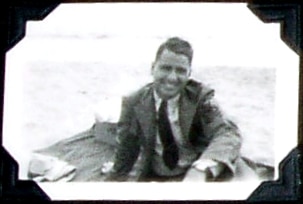
The character I’m playing with today is Frank Walters. He served in the Office of Strategic Services in World War II and when the story takes place, just after the war, he’s with the Central Intelligence Group (predecessor of the CIA). Physically, he’s based loosely on my husband’s grandfather Walter, who was in the Navy in WWII, pictured here. (Somehow we ended up with his WWII scrapbook. He traveled the whole world during the war, with pictures and postcards from Hawaii, Scotland, Iceland, Morocco, the South Pacific, and I know he served in Japan, too.)

And over to Frank:

What is your greatest fear?

Losing myself to the job. The peace might not be as assured as the general public would like to believe, but I’m here to keep things from falling apart again. At the same time, I need to prove something to myself—that we’ll prevail. That I’m on the right side. That we’re the right side because of our principles, and we don’t have to undermine those principles to do it.

What is your biggest accomplishment?

I don’t know. Standing up for someone who’s weak. Doing the right thing when it’s hard. It takes a lot of those little things like that to make it worth it—and just one failure to wipe it all out.

What is your biggest regret?

After the war, we had custody of a bunch of the Nazis’ POWs, including some Soviets. Some secret deal at one of the Big Three conferences included one little stipulation that we must’ve bowed to: all Soviets would be returned to the USSR.

Some of these men said they’d never even been to the Soviet Union. Some of them had come from there, and they couldn’t bear the thought of going back to the constant terror. After surviving a Nazi concentration camp, they’d be labeled as traitors and German spies. Maybe sent to Soviet labor camps. Maybe executed.

They begged us not to return them, to shoot them instead. Some of them even killed themselves before we handed them over.

But I followed orders. I sent grown men—and boys—begging, screaming and crying for mercy . . . to the slaughter.


Aaand back to me. Of these, question #3 was the only one I’d really worked on in depth before. #1 was there but this helped me refine and crystallize it a little. #2 was by far the most challenging. Isn’t that odd? Shouldn’t it be easier to think of something we’re proud of?

What do you think? What would your characters say? Which question would be hardest for you?

Visiting the Character Therapist

Remember: gather up your favorite articles on writing for Writer Wednesday next week!

I’ve been following Jeannie Campbell for a long time. Man, so long I can’t remember how I found her. So long that it’s been more than a year and a half since she analyzed my character on her blog. So long that I’m really excited for her new ebook, the Writer’s Guide to Creating Rich Backstories.

(Yes, backstory can be evil—but that’s more in how you stick it in your story. It’s a necessary evil. Plus, the guide is only $5!)

Jeannie Campbell is a Licensed Marriage and Family Therapist in the state of California, and she’s an award-winning writer. She combined her two loves (brilliant!) with the Character Therapist blog, and she’s expanded those offerings with the new Character Therapist site.

Since I’ve been through the free blog version of the character assessment, I can tell you a little about how it works:

I wrote to Jeannie to explain the situation in my book, and asked how my character might react, and whether my planned reaction was psychologically feasible. We exchanged emails for a few days, and she gathered background information on my characters and their interactions. She asked for a lot of details to make sure her analysis was thorough.

Once my turn came up in the queue, I got to see just how thorough she was: very! She briefly summarized my character’s situation, the background and my question, then she discussed the various possible reactions, and the factors that would influence my character. Her advice was not only applicable to me and my characters, but they’re also general enough to help any character in a traumatic situation.

Check out her assessment for me here!

Tomorrow I’ll be participating in Elizabeth Mueller’s MC blogfest, using questions from Jeannie’s character assessment “intake form.” Why don’t you join in?

What do you think? What would you ask a Character Therapist?

Character therapist illustration by Elizabeth Mueller

New feature coming: Writing Wednesday!

Okay, I know there are a lot of Writing Wednesday type memes out there: WIP Wednesday, Writing Advice Wednesday, Writers Wearing Waders Wednesday, Writers Watering Weeping Willows, Wildflowers and Wildebeests Wednesday. . . . (I may have made up one or two of those.) But this is new (I think).

My mom, sisters and I started a craft blog a couple months ago (stick with me here). In the craft blogosphere, dozens of blogs run weekly “Linky Parties.” Participants add links to their crafts from the week, and visitors to the site get to see pictures. Hundreds and hundreds of pictures. They can click through and find new great crafts, tutorials and blogs. Lots of the linky parties also feature their favorite crafts from the week as well.

I wanted to bring those fun benefits to the writing community, too. So starting next week, I’ll host WRITING WEDNESDAY every other week: bring your favorite articles on writing and we’ll add them to a Mr. Linky.

What are the rules?

  1. All articles must directly relate to writing. If you see something that makes you think of a writing principle, and you want to participate, I recommend you blog about your thoughts, and then submit your blog post.
  2. Articles can come from your blog or someone else’s.
  3. If it’s your post, link back to Writer Wednesday in the post so your visitors can join in the fun!
  4. You can submit up to three articles total.
  5. Posts can be old or new.

Why should you participate?

  • We can all benefit from this!
  • Find new blogs and great writing advice—without sifting through the ENTIRE INTERNET.
  • Share the articles you’ve worked so hard on with my 200+ RSS subscribers.
  • It’s a great way to grow a blog!

So start collecting articles for next week!

Photo by Heather Sunderland

The collected wisdom of website design

I used to do website critiques fairly regularly, and fantastic web designer Kathleen MacIver gave wonderful in-depth critiques to our participants. We’ve fallen out of touch (but Kathleen, if you’re reading this, I’d love to change that!), but a lot of her wisdom from previous critiques is just as applicable to our victims volunteers from this round!

On defining your site through blog goals:

Is [your blog] primarily for you, as a method of self-expression? If so, then who cares what it looks like!

The fact that you asked for this review, however, makes me think that you ARE hoping this blog achieves something. It doesn’t appear that you’re trying to promote your own writing, since a skim down through the posts showed me nothing along those lines. Are you trying to build a small community? Just meet people online? Right now this blog is a pretty clear reflection of you, as a person, and your love of words. It’s not a reflection of your stories or books or poems, or of a particular genre. Do you want it to be?

I’m not really sure what to suggest, since I don’t know what that goal is. But think about it. This is where every website should start . . . with a careful assessment of what the goal of the website (or blog) is, what you hope it will achieve, and who you hope to reach with it. Everything else needs to follow that.

On matching your design to your theme, and the purpose of design:

A website made from a basic, generic template (99% of the time) is like finding a hardcover book that’s missing its dust jacket (the old kind that had nothing more than a solid color and gold lettering on the edge). There’s nothing to turn you off to the book/site, but you really had to have a compelling reason from somewhere else in the universe to open up that book and start reading, because the book cover itself is offering you nothing.

You do have that little paragraph that explains a little. Now you need to find a design that is the visual interpretation of your concept. . . .

Basic layouts for blogs are often best, since people are there to read content (once they know they’re interested, of course).

So all-in-all . . . you don’t have anything wrong here, but you haven’t really taken any steps toward the two main goals of a website’s design, which are:

  1. Instantly portray what your website is about, and what the visitor will receive if they hang around. (In your case, interesting information that they’re not likely to find anywhere else on the Internet, since the number of brain scientists blogging about writing has got to be extremely small)
  2. Make the site stick in their mind, thereby upping their chances of wanting to come back, coming back, and remembering why they bookmarked it when they do come back.

And this one is actually from me, on the purpose of a website:

Also, make your website somewhere that people will want to come back to—do something for them, reach out to them (see building a community), be accessible. Even if they’ve already bought your book, they’re still your customers, your readers, your fans, and striving to build a relationship with them (individually and collectively) can help sustain you, both emotionally and financially. . . .

Always remember: your website will be the major way you’ll interact with most of your readers and potential business associates. Use it wisely!

free website guideI’d forgotten how much good advice has already passed through here, and I know many readers weren’t here two years ago when we were doing these. Luckily, I’ve already collected the generally-applicable advice from several of the critiques and put them together into a handy, free PDF: a Guide to Aspiring Author Websites!

What do you think? What did you take away from these critiques that will help with your site?

Photo credits: heart in a book—Piotr Bizior; book without cover—Marcos Ojeda

Website critique: Ronda Hinrichsen (RondaHinrichsen.com): help from search engines

The last of our site critiques is for Ronda Gibb Hinrichsen, author of Missing and Trapped. Hi, Ronda!

Content and navigation
The site layout is simple and easy-to-use. There’s a hint of mystery in the mist around the trees, which relates back to your theme.

Your bio is informative, but it could also be fun! If people are coming to your site, they want to know more about you, so you can write a heck of a lot more than you might on a bio in a book. The trivia in the sidebar is a good start, as is the FAQ (though questions about the individual books could be on the book pages). You could also mention your family.

I think I’ve made it clear how I feel about contact info buried at the bottom of the about page! On the other hand, I don’t mind putting your awards on the About page, and I think it’s fantastic that you’re using a link and anchor to jump down to them.

You have separate pages for each of your books. This is okay right now, but as you write more books, will your website be able to grow with that? I’d suggest keeping pages for your individual books to 1-2: One page for all your books, with possible the second page for your most recent release. I’m assuming GoDaddy gives you five pages for your site, so this would free up a separate page for your Events, which might be more useful than the FAQ, for example.

I like that you have the covers of your books prominently displayed on the home page and each of their pages—along with purchase links! Always a good idea!

However, each tab on your navigation opens in a separate page. After reading the home page, I clicked on the about page, etc. After reading through each page of your site, I realized it had opened each page in a separate tab:

I’m hoping there’s a check box or something you can check somewhere to change this setting. Otherwise, you’ll want to take target=”_blank” out of each link on each page.

I love the background color on your site, but light text on a dark background is harder for people to read. Maybe you could find a way to add a lighter background behind the content area of your pages and switch to darker text (maybe even matching your background!).

Search engine presence:
I have some great news for you: I misspelled your name when I Googled you, and Google corrected me:


Google knows you!

And you totally dominate Google for your name. The first three results are your site, and it also lists your Facebook, blog, Twitter, your book on Amazon as well as some reviews.

I was very confused to see your site listed twice in the results, until I realized one was RondaHinrichsen.com and the other is RondaGibbHinrichsen.com. I worry that this might be confusing for readers, too, when they visit the Gibb version, which happens to be a blog. They wouldn’t realize this isn’t your site, only your blog—I definitely think you should include a prominent link to your full site on the Gibb version.

Bing, which serves results for Yahoo as well, knows you well enough to make your name a suggestion:

Bing’s results aren’t quite as impressive as Google’s. They include the “plain” and “Gibb” sites, and one page inside your site. The results also include Facebook, LinkedIn, Goodreads and a couple more personal sites: MyLife and Manta, which lists your address, phone number and income. (You might want to see about having that removed from Manta!) The last results include reviews.

Probably the best thing about Google and Bing knowing you is that it helps to eliminate (or at least minimize) the need to optimize for misspellings of your name.

Thanks for volunteering, Ronda!

What do you think? How else can Ronda get the most out of her website?

Website Critique: Trisha (thefarseas.blogspot.com): a blog about you

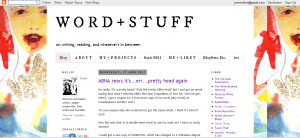
We’re continuing our website critique series today with Trisha’s blog, WORD+STUFF. Hi, Trisha!

Content & Navigation
One of your strong points is your topic and content. I like that you have your blog as a place to talk about writing, but you’re free to do more than that. You’re more than just a writer, and your various topics show that.

I like how you have social media links in sidebar. You could highlight them just a touch more with a header for that section that’s a call to action—Connect with me or something similar.

However, those shouldn’t be the only way a visitor can contact you. I always advise a contact form on your website!

On your Projects page, I like the way you let us know the story behind the projects, but a little more info about the projects themselves might help to hook us better. (This may not be a big issue if you’re not pursuing publication on some of your older works.) Also, the link to the excerpts doesn’t work (you need to capitalize Excerpts in the link). If any of the excerpts correlate with the projects you list here, consider linking directly to those excerpts in the description of your book.

Design
The eclectic design seems to reflect your tastes, but you might consider something that relates a little more directly to your blog’s topic and theme—and that of your writing, if you have a genre or subject area that interests you most. I’m not clear whether the art in the background is yours. Maybe you could explain this on your about page, and talk a little about your art. Your Art page could explore this further, talking about your training, media, inspirations, etc.

Search Engine Presence
As far as your search engine presence goes . . . well, it’s really hard to say, since you don’t use your last name on your site. I understand concern for your privacy, but if you’re selling your brand (and you are your brand), it helps to actually have that on your site. You’re not Google-able without it. (I did try searching for Trisha, just in case you’re actually a super-famous one-named artist in Australia, but no luck yet.) If you’re going to use a pen name, you might think about branding that now, too.

Good luck!

What do you think? Is your blog topic broad enough?

Website review: Sierra Gardner (sgardn.blogspot.com)–highlighting blog content

All right! A little behind schedule, we’re digging into the website reviews. Ted will get to the visual side of the reviews ASAP, but I want to get these reviews up even sooner than possible (ESTP?). And we’re starting with one of my fellow crusaders, Sierra Gardner!

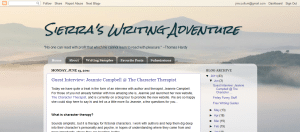
Hi, Sierra! Since I’ve subscribed to your blog for almost four months now, I’m familiar with some of your great content already. Highlighting that content can be a challenge for all bloggers, but I can see you’re working very hard to do just that. We’ll also look at your future marketing efforts, since you’re not pursuing an agent or a book deal yet.

Content and navigation
I’m always happy to find an About page quickly and easily on a new blog. Your bio is cute and personable. You might consider using the sidebar widget version of “About Me” in addition to the page, so we get some idea of the face behind the blog without having to dig deeper.

Also, you might consider breaking contact me into a separate page. If I came to your blog to contact you, I might not think to look on the about page for that info—and if I did, I’d still have to scroll down to find it.

You’re working hard to highlight several types of content on your blog, and that’s great. You’ve got a page that lists writing samples you’ve shared as well as one for your favorite posts. Both of these are great ideas. You might be able to make these pages work even harder for you by sharing a short summary or synopsis of the post or sample to encourage clickthroughs. On your writing samples page, at the very least an indicator of the genre could help entice readers to click. The favorite posts page might also benefit from a sentence or two of description to hook your readers.

The Submissions page is a little bit confusing, especially on a writing blog since we’re used to seeing submissions on only agent and publisher sites. While the name is appropriate, a title like maybe Guest Posts & Questions might help, too. If you have any examples of either type of submissions, maybe list & link to them underneath.

You might also consider moving the followers widget higher to highlight that feature of your site and encourage people to follow your blog. Generally, the archive isn’t the best thing to have first in your sidebar—it doesn’t ask your readers to engage or take further action as effectively as subscribe buttons, a Followers widget, social media buttons or even your bio. Show your readers how to

Search engine visibility
On Google, your blog comes up third for your name. Your LinkedIn profile is fourth. There are a couple Facebook profiles, but they’re not yours. In Bing/Yahoo, your LinkedIn is first, but your blog doesn’t show up in the top 10 results—although your Blogger User Profile does. When you’re ready to begin the agent search, be sure to include your name prominently on your site, and get links using your name as the link back at your site (such as from guest posts). If possible, it might be good to move your blog to sierragardner.blogspot.com (or better yet use Blogger’s Custom Domain feature to put it at sierragardner.com, sierragardnerauthor.com or blog.sierragardnerauthor.com).

Optimizing for your name does post some challenges. There are a lot of people out there named Sierra Gardner or Sierra Gardener, and there’s even some competition from the Riverside, CA, community of Sierra Gardens. However, it doesn’t look like anyone is actively trying to rank in search engines for your name, so a little bit of effort could pay off quickly and well.

I’m sure you come across this pretty often, but it might be difficult for readers to remember how to spell your name. (NO, I’ve never had that problem. Sigh.) You might think about also optimizing for Sierra Gardener so your site ranks high when people search for your name spelled incorrectly.

Sierra, thanks for sharing your site with us and good luck in all your writing and blogging efforts!

What do you think? How can you highlight the content in your blog better?