Tooting my own horn

In the unlikely event that you’re not already reading the masterful blog of literary agent Nathan Bransford, I seriously recommend it. He’s a great resource for learning all about literary agents—what they do, how to get them, how not to annoy them and inadvertently sabotage your writing career with an ill-fated rhetorical question.

And apparently he’s also a wonderful human being, because instead of just being super kind to writers, he’s spending next week volunteering in a South American orphanage. No joke. Since he didn’t want his blog to lie fallow, he called for guest bloggers for next week. Out of over two hundred and fifty entries, guess who was one of the chosen five?

I know, can you believe it? (Um, me, guys. It was me.) So be sure to subscribe to Nathan’s blog and keep an eye out for five award-winning posts next week.

free creating character sympathy guideIn the meantime, we’ll continue with our series on deep POV (though if my post runs on a Tuesday or Thursday, we’ll rearrange the schedule to accommodate that). And in other news, I’ve assembled our series on creating character sympathy into a free PDF guide.

Many thanks to Nathan, and I’m looking forward to the guest posts there as well as our continuing series here.

What is deep POV?

This entry is part 1 of 14 in the series Deep POV

Welcome to our series for July: taking the plunge into the deep end of point-of-view! (Perfect for the middle of summer, right?).

Ordinarily, a discussion of deep POV looks in-depth at the history of point-of-view in fiction. Feel free to read Alicia Rasley’s article (linked there) if that’s what you want to do. For our purposes, we’re just going to look at what’s most popular now—and this is one trend that we all have to pay attention to. For better or for worse, deep POV is the default mode of storytelling today (other than first person, of course).

So what is deep POV? Interestingly, it’s very like the other major mode of narration today, first person. In first person (“I did this and that.”), we are limited to only what the protagonist/narrator thinks, feels, perceives and guesses. Just like you can’t read others’ thoughts, a first person narrator can’t know what other characters are thinking. Similarly, in deep POV third person (“He did this and that.”), we are limited to the thoughts, feelings, perceptions and guesses of a single narrator per scene.

Of course, that’s just third-person limited mode. What makes a point of view “deep” is how “close” we are to the viewpoint character’s thoughts. In a distant third-person mode, we may be privy to few of the character’s direct thoughts, and those are always related in italics. We may rely more on their actions and speech to characterize and understand them. Often, we’re acutely aware of what the viewpoint character is doing, as if we’re watching them with a tight focus, and every once in a while we get a voiceover of his or her thoughts (mmm, Burn Notice).

In deep POV, the character’s thoughts can form almost a running commentary on the actions of the story. We don’t just get the occasional The problem with blackmail is that it’s like a gun with only one bullet or Yeah, the mob isn’t exactly known for its cushy retirement and severance package. Statements like that—direct thoughts from the viewpoint characters’ heads—are woven into the narration. In very deep POV, those statements might not even be italicized.

Sometimes, you can get so deep into POV that we don’t “hear” the “author’s” voice in narration, but the character’s. (And that can be awesome.) Everything we, the readers, get is as if we were seeing it through that character’s eyes (or brain, since we get a lot of his/her processing, too). We don’t just watch this character and his or her actions—we don’t see the character looking out the window. We see what s/he sees through the window. We seem to live the character’s experiences ourselves.

That’s a powerful narration mode—and that’s why deep POV has become so popular.

In pure deep POV, “head hopping,” or peeking into the thoughts of other characters within a single scene, is never allowed. Of course, a number of well-known, multi-published authors do this, but in general, new authors have to show that they truly understand point-of-view (oh, and sell books) before they can flout its conventions. In deep POV, you can have more than one viewpoint character, but to change between them, you have to insert a scene break. No matter how smooth or lovely you think your POV change is (and really, it might be masterful), it destroys the illusion of seeing the world through one character’s eyes and throws readers off.

Coming up this month, we’ll be looking at deep POV in detail. We’ll draw lessons from awesome articles around the web on how to show our character’s perceptions and worldviews. I’ll be reading from Alicia Rasley’s book, The Power Of Point Of View (as soon as it arrives; shipped yesterday!). And I already have some ideas for fun practice exercises for getting into our characters’ heads and seeing the world from their perspective.

What would you like to learn about deep POV? What do you like or dislike about the most popular narration mode today?

Photo credits: plunge—Konrad Mostert; man looking out window—Ben Husmann; city view—Mihai Estatiu

Where is fancy bred?

This morning, it happened to me again. I had a dream. And not just any dream, a dream: one of those dreams that inspires a big, big story.

I’ve sketched out the characters from the dream, the scene, the basic plot idea, and I did a little research (it was a historical dream). Evernote (which I learned about yesterday via The Creative Penn) is my new friend. I haven’t decided if this is what I should write next, although what I was planning to work on is only slightly less sketchy at this point 😉 .

I’ve had a couple stories begin as dreams before, and so far, that’s probably my most common source for story ideas. What’s yours?

[polldaddy poll=1751572]
(there’s a poll in this post; click through to participate)

Oh, and if you’re wondering, the post title is from Shakespeare’s The Merchant of Venice:


Tell me where is fancy bred,
Or in the heart or in the head?

But I’m not afraid to admit that I know it more from Willy Wonka.

I love hearing this from other writers. Where do you get most of your story ideas from?

Photo by Gravity X9

Sympathetic characters: more resources

This entry is part 10 of 11 in the series Creating sympathetic characters

This month, we’ve learned about creating sympathetic characters—giving them strength and struggles, balancing each of those elements, and specific techniques for making our readers identify with even unlovable characters.

If you want to read more on creating sympathetic characters, here are the absolute best, most useful resources I’ve found:

  • Sympathy without Saintliness, an online article by author/editor Alicia Rasley. Alicia takes us through some of the most beloved characters in literature capture our sympathies, as well as dispelling some common authorial misconceptions about how we can make our readers like our characters.
  • How to Write a Damn Good Novel, II by James N. Frey, specifically chapter one, which shows internal and external techniques to create deeper and deeper sympathy in your readers (which we’ve discussed here briefly).
  • The Unlovable Character, a blog post on Writing on the Wall Blog by Julie Wright with an exhaustive list of techniques and characteristics to make readers love even unlovable characters (which she graciously expanded with more examples for us here).

[Update: here’s a great quick overview on techniques that do and don’t work for character sympathy.]

By request, in July we’re going to celebrate summer by taking a plunge in the deep end of POV. (Don’t you just love the clichés?) This is a great way to follow up a series on characters, since we have to know our characters well to get into deep point-of-view, and since we’ve been working all June to help our readers lose themselves within our characters.

What resources have you found that helped you improve your characters? What would you like to read about in deep POV?

Image credit: Svilen Mushkatov

Why I love Burn Notice

This entry is part 9 of 11 in the series Creating sympathetic characters

Yes, it’s cool and it’s glossy and it’s filled with attractive people. And guns and explosions and spy work and secret undercover coolness. And hilarity.

But that’s not why I love Burn Notice. (Those things don’t hurt, mind you.)

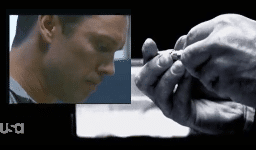
Michael Westen of Burn NoticeI love Burn Notice because of the characters. Namely one Michael Westen. (And no, I don’t mean Jeffrey Donovan, though he is quite attractive. I mean Michael Westen.) When USA says “Characters welcome,” they mean it.

Michael is a complex character—he’s terrible at interpersonal relationships. He does bad things. And though he wouldn’t talk about it and takes no pleasure in it, he has killed. He’s not above blackmail or letting the bad guys kill each other.

Though he’d prefer not to have to deal with them, Michael loves his mom and his brother and does all he can to protect them. In a recent episode (“End Run“), Michael was blackmailed into working for a bad guy because said bad guy threatened his brother. The writers even made it so that working for the bad guy wasn’t all that bad—he didn’t want a nuke, just a particular electronic interface. “People will go on killing each other in little wars all around the globe, whether or not you steal it,” he says. “The only difference is how much money I make while they do it.” To show he’ll make good on his threat, the bad guy even shoots Michael’s brother in the arm.

It wouldn’t be so wrong, then, would it? It would save his brother’s life (before he bleeds out, too), and it wouldn’t cost the world much.

Michael Westen building a cantennaMichael breaks into the office, gets the weapon and—sees a photo of a family. With kids. While that reminder helps him put together some of the scant evidence they’ve compiled about this bad guy, I think it also reminds him of the greater good. “I’m not handing over a nuke to save one life,” he tells the bad guy, “even if it is my brother’s.”

Michael is a great character because he’s strong—physically, yes, but more importantly, he’s extremely smart/savvy (mental strength, if you will). He even verges on too strong—as a blacklisted spy/former black ops soldier, he knows just what to do in any given situation. But he has weaknesses—the classics: children; his family; oh, and the fate of the entire world. Most importantly, he struggles.

And this time, he struggled because the choice was hard—it wasn’t save or destroy the world (or save the world, sacrifice integrity), it was save his brother or some small number of unknown people—possibly no one. The talented writers made it seem no great sin if Michael had decided to trade the weapon for his brother’s life. And he almost did.

But in the end, he didn’t. And that’s what I love most about Burn Notice.

Who are your favorite television characters? Why?

You can watch the full episode on Hulu until July 30.

What would you like to see next?

Lately we’ve had some fun series all about verbs and creating sympathetic characters. The series on creating sympathetic characters will wrap up next week (unless you have some specific questions or topics you’d still like covered in that area).

I have a couple of ideas on where to go next—but I’d love to get your feedback, so we can discuss what you’re most interested in. So, the topics I’m thinking of covering next are:

  • How to use and not abuse (or confuse!) commas,
  • Editing techniques to make sure every scene moves your story forward, or
  • How to critique others’ work (and possibly how to find/establish a critique group)

So if you have a preference among those three, or any other ideas, let your voice be heard!

Photo credit: Svilen Mushkatov

Making readers love (or at least understand) unlovable characters

This entry is part 8 of 11 in the series Creating sympathetic characters

By Julie Wright

There is a song by The Smiths where the first line is, “I know I’m unlovable. You don’t have to tell me . . .”

Sometimes we write characters like that, characters who are hard to relate to, hard to like, hard to care about.

Hi. My name is Julie Wright. I write those kinds of characters. The problem is that I never feel like I’m writing those kinds of characters. I happen to love the unlovable. I think sarcasm is funny. I think bitter people sometimes have a right to a good rant. And I think the flaws in each person—the flaws we all have whether we admit it or not—make us wonderfully human.

Jordan has been doing a blog series on creating sympathetic characters. She’s already mentioned the “street rat” and the princess. So you understand already that flawed does not have to equate to evil. But sometimes we writers forget to add the details of our thief sharing his entire meal with a few beggar children. Sometimes we writers know those details, but never get them on the page. For example:

In my novel My Not-So-Fairy-Tale Life, my heroine is horrible. She is sarcastic, bitter, angry and rebellious. She is angst personified. I love her. But not everybody loves her right at the beginning. She’s one of those characters you have to learn to love. While submitting the book in the beginning, I failed to put in those details about her past and present that made her lovable. I knew those details, but it took me a couple of edits to get them down on the page so the reader knew too. Once those details were there, even if you started out not liking her, you couldn’t help but at least understand her by the end.

To start out with someone who is reprehensible and then grow to love them makes for a fun journey for the reader as well as the character. It allows the reader access to understand other people, other motives, other walks of life. It allows the reader to grow and find compassion and comprehension within themselves.

I don’t write the unlovable as a moral object lesson for readers. I think I write them because I was so unlovable for so many years of my youth and I can relate to the unlovable. I am horribly flawed and yet I feel like I have worth—value. If I feel that way, then surely others do as well.

But how do you write snarky, ill-tempered characters and keep readers from throwing your book across the room, or worse from writing you and demanding a refund?

Daphne Atkeson, someone I know from an online writer’s group for YA novels, created what she calls a “cheat sheet” of ways to establish early empathy (not sympathy, if we feel sorry for our characters, we end up making their journey too easy) for a character. She gathered this information from several craft books by Billy Mernitt, Michael Hague, Donald Maass and Orson Scott Card.

Here is her list with her permission:

  • undeserved misfortune
  • Liked or loved by someone else
  • Good at something, has a strength
  • Trying to improve or be good
  • Wit or boldness
  • Aware of his flaws
  • Has some power
  • Has a familiar flaw
  • Shows forgiveness
  • Self sacrifice

In My Not So Fairy Tale Life, I had to incorporate a lot of these things from this list in order to make her relatable to the reader. She was violently abused and neglected as a child so much of her thorny personality was built on purpose as her way of defending herself from getting hurt (undeserved misfortune). Her brother, who is a really nice guy, loves her irrevocably (liked or loved by someone else). She is actually incredibly intelligent (good at something).

When she finds out she’s pregnant and goes to abort the baby, she recognizes she is on a path she can’t continue down so she doesn’t go through with the procedure and works hard to make sure the baby is healthy through the rest of her pregnancy (trying to improve or be good). She VERY sarcastic and has a comeback for just about everything (wit or boldness). She is painfully aware of her flaws. In spite of the abuse she learns to forgive her parents (shows forgiveness). In the end, she gives her baby up for adoption because she knows she isn’t ready or grown up enough to raise a child. And even though it hurts, she gives the baby to a family who is ready for it (self sacrifice).

Lots of books incorporate the flawed character. Janette Rallison did a smashing job with her book Just One Wish. The character breaks a ton of rules, gets into all kinds of mischief, but she’s doing it all for her little brother who has cancer. You can forgive her the lunacy because you understand the motive.

Never forget motivation. Motivation is the driving factor behind everything we do. Along with motivation, a character must have:

  1. PURPOSE—most important—what he wants, must be specific
  2. CREDIBILITY—believable
  3. EMPATHY—not sympathy, don’t feel sorry for him, identify with problem.
  4. COMPLEXITY—inner conflict, more than one side, surprise us with unseen aspects, contradictions and quirks

To the degree that your character feels passionately invested in his own life, the reader will feel invested, too. We need to be able to root for the character, to care whether or not the character wins the prize. To do so, we need to make sure the character DESERVES to win. In the original movie Willy Wonka & the Chocolate Factory, we realize that even though Charlie stole a little Fizzy-Lifting Drinks, he still deserved to win because he was a good kid.

The reader also needs to know what is at stake. For Janette’s character in Just One Wish, her brother’s life was very literally at stake. In the book The Hunger Games, the main character’s own life was at stake. She needed to get all of her primal needs met (food, shelter, means of defending herself). In the book Sun and Moon, Ice and Snow by Jessica Day George, the life of her beloved is at stake.

Something has to be on the line and it has to be a big something. Your character needs to stretch and grow and they cannot accomplish that if they have silly, paper-thin conflicts to deal with. When you inflict pain and trouble on your hero, you reveal him for who he is. You learn what motivates him, what is important to him. When you inflict pain and trouble on your hero, you discover what exactly it is that makes him the hero.

About the author
Julie Wright is extremely busy as a wife, a mother of three, a rural grocery store owner, and an author of or contributor to six novels and books on writing craft. She blogs at Scattered Jules and Writing on the Wall. Her latest book, Eyes Like Mine, is available for pre-order now.

July Writing Challenge

Tristi Pinkston is hosting a July writing challenge! For the month of July, we’re setting goals for what we’d like to accomplish in our writing projects, whether that’s words written, pages edited or even research done.

July is set to be a pretty busy month for me—festivities for the Fourth of July (seriously; my husband just called and said he got us tickets to four different events next week), my family here for most of the month, two family reunions, a road trip. . . . I think I’m getting a little ambitious. But we’ll try, anyway!

  1. Edit 350 pages of my MS:
    • Go through my writing partner’s notes on the last ten chapters
    • Go through the second half of the book again to make all my planned changes, add two scenes and cut out the parts people skip
    • Get as many chapters to my critique partners as they can stand. 😉
  2. Read my library books:
  3. Read at least one book off my Summer Reading Thing list.
  4. Continue to mull over the exact plot, premise and motifs for my next WIP. (If I’m feeling really ambitious—or, y’know, stuck on a long road trip—even outline one book or the full story arc.)
  5. Stay current on critique partners’ edits.

This is a great way to help us reach our goals. By writing them down, we have something concrete to work toward. And part of the challenge is checking regularly at Tristi’s challenge blog, where you get accountability and encouragement. And at the end of the month, we report to Tristi for our final dose of accountability. All of these things can help us achieve our goals.

So what are your writing goals for the next month (well, five weeks—my goals start from today for me)? Share them in the comments or on your blog to participate in the challenge!

Photo credit: Richard Dudley