Let’s get emotional

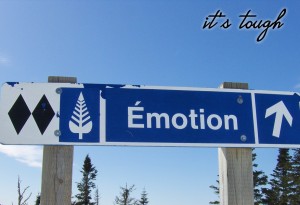
This entry is part 2 of 14 in the series Emotion: it's tough

Remember the Romance Blogfest coming up on February 14, just one week away!

It’s time for another series! I’ve been pondering this one for a long time because emotion is vital to fiction. And what more emotional month is there than this one? Love, hope, disappointment, despair—and that’s just on Valentine’s Day! 😉

We know that most readers read for an experience. New circumstances and exotic settings do give our readers an experience. But to truly immerse them in our characters stories, we need emotion.

But, just like in real life, emotion in fiction is tough. It requires just the right touch to know when and how to put it in, a fine balance to know when to leave it out, creativity to avoid clichés and reaching deep within ourselves for authenticity—possibly even exposing some of our hidden inner lives to the entire world.

It’s easy to rely on clichés, to tell what the character’s emotion is, to underwrite to the point of apparent sociopathy or overwrite to the point of purple prose. But easy writing is seldom powerful writing, and seldom powerful reading. To really reach (and hook!) our readers, we have to get to their emotions. So this month, look for posts on effectively creating characters’ emotions!

Got something you want to say about writing emotion? Guest post! Email me at jordan (at) jordanmccollum dot com for the full guidelines—but I do have limited slots, so hurry!

Photo by Peter Dutton

Romance Blogfest Coming Up!

Ready to participate? Sign up here!

Just so you have no excuse this year: Valentine’s day is two weeks away! Now, naturally, for the real people in your life, you’ll probably want to commemorate this some way. You know, flowers, chocolates, . . . promises you don’t intend to keep, et cetera.

But with all that love in the air, you know you’re going to be planning something special . . . on your blog. Here’s a chance to find an automatic topic, and get lots of visitors to your blog—and find great new blogs to read yourself! That’s right, it’s a BLOGFEST!

How to participate (and rules)
1. The theme is Love at first sight . . . or not so much. Post a first meeting between two characters who will fall for each other (even if it doesn’t look like they will at the time!).

2. You may write a new scene on the topic, OR you may post a scene from your WIP. [This doesn’t preclude completed works. Because, after all, no work of art is ever finished, only abandoned.]

3. This should be a given, but all scenes should be clean (i.e. no sex [what kind of first meet is this?], limited violence and language [again, what kind of first meet is this?]).

4. Post your scene on February 14, 2011, and add it to the Mr. Linky (on my post that day, though you’re free to sign up below, too). Link your post back to the blogfest on here so your readers can read other entries, too.

5. Read, enjoy, and comment on other entries!

Want the badge? Copy this and paste it in the HTML of a blog post or your sidebar:

<a href="https://jordanmccollum.com/romance-blogfest/" title="Romance Blogfest. Photo by José Carlos Norte" style="text-decoration: none;"><img src="http://i192.photobucket.com/albums/z41/MamaBlogga/airomance.png" width="300" alt="romance blogfest badge" /></a>

Want it bigger or smaller? Change the number at width="300" to adjust the size.

Thank you for signing up in advance:

Blogfest badge photo by José Carlos Norte

Writing crutches: gestures

I’ll admit it: I’m addicted to gesture crutches. I use them over and over again throughout a book or chapter or sometimes even scene. It’s like I can’t stop, especially when I’m drafting!

What are gesture crutches, and why should we avoid them? As editor Michaela Hamilton said in an revision letter:

Don’t resort to overused gestures such as shrugged, nodded, sighed, shook his head. These are ok occasionally, but in general, seek more vivid gestures that tell more about a character, help set a mood, and create visual dimension in the scene.

Guilty as charged [author John Gilstrap writes]. My problem here is that the ones she notes are the only conversational gestures that I know of. I stipulate that I overuse them, but if anyone has other gesture arrows that I can add to the quiver, feel free to speak up.

my cousin and her friend collect pictures of themselves shruggingI, too, am guilty as charged. It’s tough to come up with original gestures, and sometimes distracting to the reader. (Think we’re alone in struggling with this? Check out this thread on Nathan Bransford’s forums.) While critique partners and editors are pretty much a must-have for the ultimate solution, I’ve found a couple ways to check myself on gestures.

Using character-specific, unique gestures
A couple weeks ago, I finished Brandilyn Collins’s Getting Into Character: Seven Secrets a Novelist Can Learn From Actors. Her very first secret, “Personalizing,” describes the process of finding a unique gesture for a character. Her example is of a rich, insecure woman who dislikes her hands, but wants to show off her ring, a symbol of her wealth. Can’t you just imagine how a woman like that would hold her hands? (It’s a conflicted gesture!)

Writing simple gestures more creatively
I also heartily recommend Margie Lawson‘s course on Empowering Character Emotions, which covers these repetitive gestures and how to write them “fresh” and “empowered,” when necessary—and how to tell when they’re not necessary at all. I also have her lecture packet on Writing Body Language and Dialogue Cues Like a Psychologist, which I’m sure builds upon those same principles (but I haven’t chiseled out the time to read it yet. Shame on me!). Margie teaches Empowering Character Emotions online in March (it was $30 last year) and the lecture packets are available year-round ($22—both are a great deal!) (and I only wish I were affiliated with her 😉 ).

Come up with a stable of original expressions
This is also from Margie Lawson (with a little interpretation from me). I realized I have a lot of sarcasm in my MS (which I love), and there were only about five gestures of sarcasm (folded arms, rolling eyes, one raised eyebrow, scoffing, pursed lips, if I remember correctly). Since I already knew the emotion I was going for, I set out to write some original, creative gestures that conveyed sarcasm. Then I had a collection of gestures to draw on and even extrapolate from further. I also found The Bookshelf Muse’s Emotion Thesaurus super-helpful!

Pick the body part first
You could do any of these by picking a lesser-used body part. I once played this writers’ game where two members of the group had to act out a scene and the rest of us had to write about their emotions using assigned body parts. I had wrists and heels. It was awesome! One character stomped around hard enough to leave half-moons in the cement floor. Another offered apologetic wrists. Another had her arms fly open like windshield wipers. Will I ever use those? Maybe not. But that kind of vivid, imaginative imagery can help you create better, more appropriate images.

Monitoring your gestures
I’m proudest of this one because I came up with it myself (extrapolated from Margie’s EDITS system). When editing a scene, make a note of what body part/area is used in the line: hands, eyes/eyebrows, shoulders, lips/mouth, etc., in the margin. Then read the list aloud for the whole scene/chapter. This helped me pinpoint repetitive or too-similar gestures in close context as well as look at the gestures themselves. If I found I had ARMS too close to one another, I could look at those two gestures quickly and easily to see how similar they were.

What do you think? How do you keep yourself from repeating the same conversational gestures?
“Making” time

I think anybody who’s really made an effort to write understands that it’s not about wishing you had the time, or even finding the time, but making the time to write.

With three kids under five, free time is a joke. My efforts to make time to write are hurting my well-being and my family. (This is because that made time never seems to start until 11 PM, and Baby has a special “Mommy’s exhausted” alarm clock that rings at 5:30AM.) (And 2AM.) (And midnight.)

So I’m thinking it’s time for a change. For a long time, I’ve been attracted to the idea of getting up early to get most of my writing in. I love the idea of having a thousand or more words written by the time the kids attack get up. (I also like the idea of actually being out of bed before they get up 😉 .)

So last night, when I was up too late already, I saw Kelly Stone’s guest post about writing schedules. And the early morning schedule was the very first one listed (of seven—seven different writing schedule options).

So I’ve undertaken the challenge, starting this morning. (Ooooor not. That special “Mommy’s exhausted alarm” kicked in from 12-1AM and 5-6AM, and that pretty much killed the what I thought was very reasonable 7 AM wake-up time.) As part of my challenge, I’m going to make myself accountable to report on what time I actually get up (and what I do thereafter). I’ll Tweet about it (I know, that really makes you want to follow me) and put a note in a post if I’m blogging that day.

Do you have a goal for your writing schedule? Have you ever tried to change?

Photo by Grant MacDonald

Pet peeve #45,103

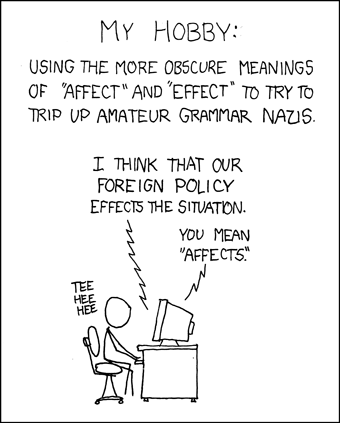
As a writer, I hate the word caused.

I know, I know, we shouldn’t hate any words. And yes, of course, caused is a valid word and has excellent usages, most of them in legal briefs.

Okay, okay, also in peer-reviewed, passive voice scientific papers.

Why do I hate caused? Because 90% of the time I see it in fiction, it’s in a verb phrase like this:

The sadness in her voice caused him to pause.

She jumped back, causing him to fall down.

Yeah, okay, they’re not inherently objectionable sentences. (Ha ha. Lawyer? Object?) But for the vast majority of sentences like these, the “cause” sounds external, overwritten and intrusive.

I may have some strong feelings on the matter.

What on Earth is wrong with just using the word “made“? Isn’t that what most of us would say? Isn’t it simpler and more elegant?

Most of all, when we use caused, we sound like this:

For our one year anniversary, my girlfriend caused myself to go to a Yankees game, with whomever amongst our friends can go. But, the Weather Channel just changed their forecast and the skies are grey, so we might go with the girl that lives next door to see the movie, “Iron Man 2”.

Yeah, I know, I’m my own brand of crazy.

What otherwise innocent words drive you crazy? (And don’t say you just hate the way “moist” or “moisture” sounds. I hate people who say that!)

Photo by Benny Lin

Top 5 books of 2010

This year, I set a goal to read at least 25 books (didn’t figure it’d be hard). I beat that and read 40 (woot!). My five favorite books published in 2010:


Cold as Ice
by Stephanie Black


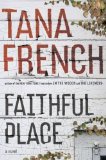
Faithful Place
by Tana French


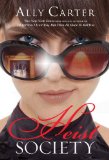
Heist Society
by Ally Carter (Just fun!)


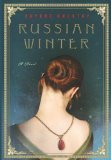
Russian Winter
by Daphne Kalotay


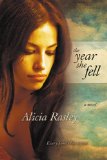
The Year She Fell
by Alicia Rasley

I still had a number of 2010 books to read when I made this list (including Matched by Ally Condie [since read and enjoyed], Paranormalcy by Kiersten White and The Silence of God by Gale Sears), and I’m looking forward to attacking that ever-growing TBR with a vengeance this year!

What were your favorite books published in 2010? What books from last year do you still have to make time for?