Creating Compelling Villains – Stephanie Black – The Book Academy

We’re still on break from our series on plotting to bring you notes from The Book Academy, a conference I attended last week. We’ll pick up with plotting tomorrow—including a guest post later this week!

In suspense, you have to have a villain. You have to have a person who is fighting against a protagonist.

Exercise #1—Write down a villain who stands out on some level to you—and why

Class answers:

  • President Snow from Hunger Games? Description—smells like roses and blood
  • Hannibal Lecter—creepy, without morals
  • Brilliant manipulator
  • Gollum—obsessed, internal conflict
  • Darth Vader—layered, conflicted, simple appearance, memorable, willing to do what it takes to get his way
  • Nicholas Nickleby’s villain—Heartless, but there’s a moment in his past where he chose darkness
  • Voldemort
  • Javert—thinks he’s good, convinced of morality
  • Joker—flair for dramatic, feel emotional connection as killing, loved that connection
  • Clooney the scourge from Redwall—legend of fearsomeness, backs it up, crazy
  • Oliver Twist villain—utter disregard for reader’s sympathies
  • David Copperfield villains—bad, love to hate

black stetson“You have a choice when you’re going to introduce a very evil character. You can dress a guy up with loads of ammunition, put a black Stetson on him, and say, ‘Bad guy. Shoot him.’ I’m writing about shades of evil. You have Voldemort, a raging psychopath, devoid of the normal human responses to other people’s suffering, and there are people like that in the world. But then you have Wormtail, who out of cowardice will stand in the shadow of the strongest person.” —JK Rowling

How compelling your villain is doesn’t depend on how creepy and freaky he is, but that he seems real to your protagonist, and as real as your protagonist to your reader. They must also fit your story. A cozy mystery probably doesn’t need Voldemort. A global thriller probably wouldn’t be very thrilling with the biddies from Arsenic and Old Lace.

We can also have multiple villains in same novel with multiple levels of villainy:

  • Voldemort
  • Bellatrix LaStrange
  • Peter Pettigrew/Wormtail
  • Draco Malfoy
  • Severus Snape

Hints for creating villainous characters

In suspense fiction, plenty of people are causing trouble for your villain, but pick a primary villain. Find the main antagonist. Who’s your big guy? In mysteries, think about who this fight is really between.

Jack Bickham talks about how you must know whose story it is. (In her first novel, 250 single-spaced pages into it, she realized her story was going off in 3 different directions—she turned to Bickham). Don’t forget whose story it is. Who are we behind? Who are we rooting for? Who is our ball team?

On the flip side, whose story is this villainwise? Your protagonist has a story goal, something he wants from the beginning of the book. It’s important to him, important enough to fight for. It gives readers something to worry about (which is why they like reading mysteries in the first place). When you read a book with a story goal, you immediately start asking yourself story questions. Frodo must destroy the ring—will Frodo be able to destroy the ring?

In addition to your protagonist, your villain also needs to be goal-driven. He’s got something that he wants. When you’re picking a villain, you want it to be someone who will win or lose big depending on how the story plays out, just like the protagonist has a lot invested in whatever s/he is seeking. Winning and losing—if one wins, the other must lose.

Creating conflict in your novel

The last thing you want to do is give your protagonist an easy ride. Give him as much trouble as possible. If you answer the story question too quickly with a positive, the story’s over.

Shortest stories ever:

He always wanted her. And he got her.

She had to escape. And she did.

These complications are largely the job of the villain.

  1. Pick a good, strong primary villain. Someone who can really go head to head with the protagonist.
  2. Villain’s goal must clash with protagonist’s goal—so give one a goal and find a contrary goal for the other. This isn’t necessarily a direct opposition. Her current novel—protagonist’s story goal: heal the rift between her parents and her brother. This clashes with villain’s goal not because villain is set on destroying their family. His goal is to conceal a crime in his past (by killing someone and framing someone else—her brother). (Being accused of murder doesn’t sit real well with her parents, “who are strangely traditional in that way.”)
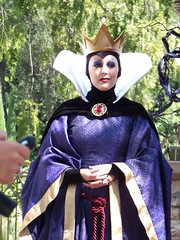
wicked queen from snow white

  • What does my villain want?! What is important to him/her? A really compelling villain isn’t evil for evil’s sake or because he’s got the laugh down. Chances are he doesn’t think he’s evil. He’s got a reason for everything. Jack Bickham: Self-concept. Inside, we all have a mental picture of who we are, our opinions of ourselves. We try hard to maintain consonance with this inward picture and we will fight to hold onto it when this picture is challenged. Hard to identify it for ourselves. What does the villain think of himself?
  • Usually villains are twisted on some level—his self-concept may be very different from how others view him. Ex: Zero in The Believer—he sees himself as someone who by virtue of lineage/intelligence, he has the right and responsibility to take over for the good of the nation. Doesn’t see himself as evil (though readers and other characters do). Villain in Fool Me Twice sees herself as a good mother. Have this in mind even if it doesn’t make it into print (especially if not in their POV).

Exercise #2—Write down a self-concept for a villain (one you’re working on)

Class responses:

  • Believes he should be a leader
  • Doesn’t believe in right/wrong
  • Humanity has outlived its purpose, cleanse the world of this scourge
  • (Possessed) Dark spirit protecting itself—self-preservation
  • Religion—convinced of his own moral righteousness
  • Sees the world crumbling around him—protect what he has and his fam
  • Get justice for the wrongs he’s suffered (victim)
  • Sees himself as a good guy
  • The best at what he does and he knows it, and gets away with what he wants b/c people are scared of him—devolves into fatal stalking situation

Your main villain (amidst others if you desire)

  1. Give your villain some shading—make them somewhat sympathetic. Use their backstory, events taking place before the present of the story. What’s their history? Make villain more rounded, even if you don’t get it all in there.

darth vaderEx: Voldemort—what makes you sympathize with him a little: Abandoned, orphan, stuck out, teased. Doesn’t justify his actions, but helps us to see him as a little more human. What might make the reader relate to him a little bit? See him as a little sympathetic?

Ex: Darth Vader in episodes I-III—starts out as a good guy, through his flaws and downfall, he loses everything that he valued, then becomes a dark evil person.

Give them a little bit of good. Zero—loves his wife, affectionate toward her, wants to please her. Even villainous types aren’t totally detestable. What about them can we admire?

Exercise #3—with the last villain, write down something good/admirable about your villain or something in his/her past that might make him sympathetic

Class responses:

  • (#5 above)—his parents disgusted at his parents, humans butcher his kind—thinks humans are no good
  • (#6 above)—Mother deprived of rightful throne
  • can’t die
  • Wants to be a pillar of the community—wants to look good—funds schools
  • Didn’t choose to be an addict
  • Weakness/soft spot for kids.
  • Hates weakness, but wants help people become better, lose their weaknesses

[Side note on this one: this is especially effective when you can combine this with their self-concept and have it directly relevant to their villany. For example, Snape is mean to Harry because in Harry he sees the image of the man who used to taunt him and destroy his self-concept. It wouldn’t make much sense if James Potter were mean to Snape and Snape took it out on long-haul truck drivers.]

Round them out with regular traits (neither sympathetic nor evil).

We have to branch out a bit. As you’re creating a protagonist, you want to create a fresh, compelling invidividual character with his own personality—same for his villain. [A good villain makes a good protagonist even stronger, and vice versa.]

  1. Three necessary attributes for principle villain:
    • Strong
    • Smart
    • Determined

He must be matched against the hero—a worthy opponent. Make him a worthy opponent—a battle with a wimp isn’t much of a battle. Your protagonist must stretch himself to defeat this guy. Doesn’t always mean villain is physically strong—psychologically, emotionally, mentally—a formidable opponent. He’s determined—what he wants, he must want it badly enough to not give up.

Bickham(?)—make sure your protagonist doesn’t quit and making it logical that he doesn’t quit. Ask yourself “Why doesn’t he just quit?”—compelling motivation to keep him going, keep fighting even when things get really rough. Villain who’s willing to keep battling to the end—don’t go all fuzzy at the end. Maybe pretend to, but don’t just give up!! [That’s just unsatisfying!]

He doesn’t have to be invincible—you do want him defeated at the end. Suspense/thriller/mystery—must end with good triumphing over evil! Have him defeated in some measure by the protagonist.

Ex: woman pursuing bad guy to get her kidnapped kids back. Fight scene, villain pulls weapon about to use it—struck by lightning. [Unsatisfying again!]

Don’t have him defeated by wimpiness, giving up (himself), deus ex machina.

  1. Give your villain believable flaws and weaknesses. It’s okay if he makes mistakes—but make sure they’re credible mistakes. Something believable, credible for his character. His flaws may spring from his self-concept—thinks he’s so smart, he’s proud—underestimates protagonist.

Ex in The Believer—a reader for her publisher asked if her villain’s monologuing was believable? But according to his motivation, yes—if he’s so proud of himself and his win, he might monologue, to utterly devastate the hero. (And because he tells his plan, the protagonist can defeat him.)

  1. Give your villain a character arc—let him change throughout the course of the story. How does he grow and change? Don’t make him the same person on the last page as he was on page one.
    Ex: one of her villain starts off not so bad, kind of mischievous, but by the end of the book she’s ready to kill.

Conclusion: You create compelling villains the same way you create compelling protagonists:

Make them real, make them rounded, give them a compelling story goal and believable flaws and weaknesses.

About the presenter
Stephanie Black is the author of The Believer, Fool Me Twice (winner of the 2008 Whitney Award for Best Mystery/Suspense) and the new release Methods of Madness. She. Is. Awesome. As per conference guidelines, I obtained written consent from Stephanie to blog the content of her presentation.

What do you think? What are your answers to the exercises? Who are your villains?

Photo credits: black cowboy hat—arbyreed; Wicked Queen—Loren Javier; Darth Vader—the Official Star Wars Blog; Villains—Anne the Librarian

How to get out of the slush pile – Lisa Mangum – The Book Academy

We interrupt our series on plotting to bring you notes from The Book Academy, a conference I attended last week. We’ll pick up with plotting—including a guest post—later this week!

In a lot of ways you’re already doing the right things, but a little extra polish can make a big difference.

Sometimes you find slush pile gems—her company found Jason Wright in the slush pile (and he became a NYT bestseller). Everybody’s a first time author at some point in his/her career.

5 things you can’t control about submitting your MS

  1. Publishing is a business. We need a book that will sell.
  2. How many other MSs submitted in a given year.
  3. How many slots the publisher has available for new writers.
  4. Other MSs submitted that are like yours [oh the agony]
  5. Editor’s mood—they have bad days, too. It’s not personal.

Writing is a personal expression—you have a story that’s in you and you’re writing it down.
Buying books is an emotional decision, based heavily on the cover and back cover copy. Editors are the same when they buy books for their companies—cover letter = cover copy. Cover letter might be most important page in whole submission—give them an emotional investment in what we have to say.

paper_pileHer employer, Deseret Book, gets a good amount of submissions—last year, the received 1700 manuscripts. They published 12 of those from the slush pile. Odds don’t sound good—but of those 1700, they only seriously considered 100-150. Others: wrong place, copy cats, not very good. [For you not-so-math-whizzes, they published <1% of the slush pile, but at most 9% of the slush pile was even publishable. Of the publishable works, they published 8-12%.)
Deseret Book does, on average, 150-160 products a year—books (fiction, nonfiction, adult/ya/kids), audio, music, backlist reprints. Every year, they want Christmas books, mysteries, picture books—the door is always open, try again next year. (Right now they’re slotting for Late Summer 2010-Early 2011).

Why do they reject MSs? It’s not personal—there are plenty of other reasons. For example, a phenomenon she calls “There’s something in the water”—manuscript submission trends—they once received 4 commentaries on Revelations in the same month. They could only publish one, so while all four were good, they had to pick the best one and reject the other three.

Usually by the time a trend is IDed, it’s waning (b/c they work so far in advance). Don’t be the next Dan Brown/Stephenie Meyer—be the first you. Start the trend. That does mean taking a risk for the publisher (is this new b/c people aren’t buying it or b/c it just hasn’t been done before?)

5 things you CAN control about submitting your MS to make a BIG difference:

  1. Do your homework
  2. Follow guidelines
  3. Write a killer cover letter
  4. Show case your talent
  5. Deal with rejection letters

Yes, there is homework—this isn’t just a glamorous lifestyle, LOL. Here’s your assignment:
Six Q you should ask about your own MS/submissions before sending out:

  1. Am I even in the right slush pile? Sending it to the publisher where it will have the best chance to shine?
  2. Who’s going to buy my book? Audience in mind as writing—YA fiction, mystery, w/e—help by presenting market in cover letter (NOT 8-80 year olds)
  3. How is your book different? Not “just like” X or “the next” Y—how is it different, better? Use touchstones as shorthand. Be clear about what’s special about your book. What is it about your book that will make it so your book will rise to the top of the charts? Why will they BUY it?
  4. What are people buying? Know what the market is doing, but don’t follow/copy it—knife edge. Know what the trends are and what people are buying and how much people are buying. Right now, how many people have disposable income to buy books? (Paperbacks, digital, etc.)
  5. What is your marketing plan? Get the book off the shelf and into someone’s hand and money in the register. The publisher might not have a large marketing budget for your book—how will you get the word out to get your book sold? Know where your connections are, who you can talk to, who you can bring on board.
  6. Have I let 5 honest people give me feedback? Is your Mom really going to say that she hated it? If so, then you can have confidence that you’ll jump to the front of the line, having gotten rid of many mistakes.

It’s so much easier if she doesn’t have to work to read it—she’s more likely to read it! Guidelines are there for a reason—know if your MS is in the right slush pile, how not to put editor in a bad mood, to whom you should direct the MS, idea of the wait, how that company works—free cheat sheet or “get out of jail free cards.”

The first impression in hard copy submission (which they prefer) is the envelope. Include complete name and address including ZIP code (don’t make her work to find you!!). Did the author use the right size envelope or is it jammed in there, and duct taped up to hold it together? Have you included the correct size SASE? Always nice to at least include a letter size (size 10) envelope. Most publishers don’t write comments on your MS, so you can ask for it back if you include an-appropriate size envelope. Immediate, easy way to get back in touch with you.

Most important page in your submission package:

THE COVER LETTER

Publishers/editors will make a decision on a cover letter the same way you make a decision on back cover

  • Business letter
  • Not too intimate
  • Simple
  • Formal
  • Professional
  • Representing a product as a business
  • Tell me who you are (complete contact information)
  • Tell me what you’re selling—write your very own back cover blurb—make me buy your book!
  • A good MS deserves a good title. Most publishers will change your title, so don’t stress too much over it, but a kind of dumb title is better than UNTITLED. Titles can change, but having something makes it easier for them to talk about it, ID it in the office.
  • Back cover blurb—can you sum up your book in one sentence? What’s your tag line? What’s your log line?
  • Why should we buy it? Why should we do business with you? Are you famous? Have you written a really great book? Is it a book we’ve never seen before? Does it fill a niche? Why out of all the books we’ve seen should we pick yours?—short bio, what writing awards you’ve won, how serious you are about your craft, not a one-book person. Can we establish you as a brand and give you a guaranteed slot in the future—do you have more than one book in you, are you a professional, do you meet commitments/deadlines?
  • Elusive—the “it” factor. You’ve acknowledged the things you can’t control, you’ve done all you can and you still get rejected. Sometimes there’s no good explanation—it’s just people on the other side of the desk. It’s subjective.
  • When it comes back, make revisions, keep it alive, don’t take it personally, keep sending it out.

Your most important sentence in your manuscript is the first one! Its only job is to make me read the next sentence—if the next sent is really good, I’ll read the whole paragraph, etc., etc.—we don’t read “until it gets good.” EX of Kay Lynn Mangum—she sent in a 600 page book, which was shelved. A few weeks later, Lisa had some free time at work and she picked it up—and pretty much fell right into that world. But they cut book by 50% and then it got published.

It’s okay to follow up to ask for a status report once you’ve waited the prescribed time in the guidelines. (DB = 6-8 weeks) Then it’s okay to call. Caveat: there’s nobody easier to say no to than a high-maintenance author. Don’t call daily. Don’t call the day you submit. Often in publishing, no news is good news. Unless they’re a huge publisher. 😉 Their guidelines should say that, though. If they’re taking time, they’re talking to sales and calendaring and marketing and and and.

What should you do while waiting? Write another book. Revise. Send it to someone else. Keep working on something—they might ask if you have anything else ready—bump to head of the line for guaranteed spots!

Questions
Are most publishers okay with simultaneous submissions?
Most people are. Guidelines will say so. Guidelines should be on publishers’ websites.

Illustrations—are they a plus/minus?
Few are author/illustrators—if you do both well, send them in. If not, usually it’s not the author’s responsibility to find an illustrator. Publisher finds professional, awesome illustrator to go with it. The author should have a vote on illustrations.

How do you discover the trends?
Go to the bookstore, come to writers’ conferences, follow Publishers’ Weekly, industry magazines. To be first, see what’s not on the shelf. How do you find out where all the publishing houses are? Writers Market. Local library, reference section. Or WritersMarket.com subscription, up-to-date. Pulse on what’s going on.

What’s the first thing you look at besides cover letter?
The plot. Is it interesting? An original take? She’s more forgiving on fiction b/c it’s harder to evaluate character development in just paragraph or two. Fiction = decision on content. Nonfiction = decision on topic [and platform]. Strong characters, clear voice, interesting situations, believable dialogue.

Her final thing: What do you do? What can you do? A quotation she saw at Disneyland (a friend of Disney’s encouraging him on building the theme park) seemed to answer these questions perfectly—don’t worry, don’t hurry, don’t stop.

Don’t worry if it’s not very good, don’t worry if it’s taking a long time. Don’t worry if you get lots of rejections. Don’t hurry your craft. Take your time. Make it the best you can. Don’t worry if you make a mistake. Don’t worry. Keep writing. Keep submitting. There will always be a need for books, new writers, new ideas, new voices. I wouldn’t have a job if you guys didn’t do your work. I want to read what you’re writing because you’re writing new and interesting things.

About the presenter
Lisa Mangum is an Assistant Editor at Deseret Book, which she admits is a little different than the NY publishers. She’s been in publishing for twelve years, and most of that time, she was in charge of sorting, maintaining and taming the slush pile. This spring, her first novel, The Hourglass Door (my review) was released by Shadow Mountain books, an imprint of Deseret Book. As per conference guidelines, I obtained written consent from Lisa to blog the content of her presentation.

What do you think? Are there any “tricks” to getting out of the slush pile? What weird guidelines have you come across?

Photo credit: Richard Dudley

Pros and cons of the three act structure

This entry is part 7 of 24 in the series The plot thickens (Mwahahaha)

Yesterday, we talked about the basics of the three-act structure by Syd Field. Today, we’ll weigh some of the pros and cons of using this method to plot our stories.

Pros

First of all, we have to acknowledge that this structure is very simple. In some ways, that’s one of its strengths. Because there’s not a whole lot set in stone, the three-act structure is highly flexible.

It’s also almost universally applicable. Even if you haven’t used the three act structure in plotting your story, odds are good you can apply it now. In fact, all of the plotting methods that we’ll examine later can be sketched out on the three act structure outline, too.

Finally, it’s very popular: it’s easy to find examples of the three-act structure in virtually every story we know and love. It’s familiar to readers, easy to understand and apply, and almost what we expect when reading a story.

Cons

However, this kind of outline of the three act structure is a little generic. It doesn’t offer a whole lot of guidance in the way of how to keep building in the story. It doesn’t give us a way to avoid the dreaded “sagging middle.”

Some critics of the three-act structure, such as former Writers’ Guild Director James Bonnet, say that the three-act structure is an artificial superimposition.

On the other hand, Bonnet argues that studying structure doesn’t automatically make you a wizard at writing well-structured stories. But come on—not studying structure is even less likely to help you avoid Winchester Mystery Stories.

Bonnet’s alternative (emphasis added):

Aristotle’s classical structure, which is the dominant feature of this structure, can stand alone. All of the structures you might find in the act are already built into the problem solving action that encounters resistance, namely: conflict, complications, crises (turning points) climax and resolution. It is, in fact, the structure of any problem solving action (real or fiction) that encounters resistance.

Does that sound a little familiar 😉 ?

What do you think? What weaknesses and strengths do you see in using the three-act structure to plot your story? Would you use it?

Picture by Luke

The act structure in action

This entry is part 6 of 24 in the series The plot thickens (Mwahahaha)

I have a three-year-old, and as three-year-olds are wont to do, he likes to watch the same movie over and over and over for about two weeks straight. So when I wanted to show the three- and five-act structures in action, I knew I had to use his latest obsession: The Incredibles.

incrediblesI’m comparing the different structures’ divisions of the “text” here, so the synopsis will be largely the same, but the placement of the acts will vary among the three act, Freytag’s five act and my five act structures.

Three act structure

(Paragraphing is mostly for readability.)

Act I—Setup—the characters’ world (still with conflict): Super heroes were celebrated icons. Bob (Mr. Incredible) and Helen (ElastiGirl), super heroes, get married. Super heroes fall out of favor and are hidden by the government.

Fastforward 15 years, and Bob and Helen are trying to look like a typical suburban family. Bob is dissatisfied with his life. The kids aren’t happy with hiding (or having) their super powers. Bob loses his job.

First turning point: Mr. Incredible is offered a secret super hero assignment and decides to take it. He also decides not to tell his wife that he has been fired or offered this high-paying assignment.

Act II—Confrontation—lots of rising conflicts: Mr. Incredible completes the assignment on a remote island. When he returns for a second assignment, he finds out there’s a villain, learns of the villain’s secret plans and is captured. His wife and kids come to save them. They learn to use their powers together, but are captured. They watch as the villain’s dastardly plan plays out in their home town, then the villain leaves to play his role there as well.

Second turning point/climax: Working together, the family escapes and pursues the villain and his evil robot. They defeat the robot.

Act III—Resolution: They return home and save the baby from the villain. They’re now a family of super heroes, and are happy and united against the forces of evil.

Freytag’s Five Act Structure

Act I—Setup: Super heroes were celebrated icons. Bob (Mr. Incredible) and Helen (ElastiGirl), super heroes, get married. Super heroes fall out of favor and are hidden by the government.

Fastforward 15 years, and Bob and Helen are trying to look like a typical suburban family. Bob is dissatisfied with his life. The kids aren’t happy with hiding their super powers. Bob loses his job.

Act II—Rising Action: Mr. Incredible is offered a secret super hero assignment and decides to take it. He also decides not to tell his wife that he has been fired or offered this high-paying assignment. (This is really the divider between act I and II still.)

Mr. Incredible completes the assignment on a remote island. When he returns for a second assignment, he finds out there’s a villain and learns of the villain’s secret plans.

Act III—Turning Point/Midpoint: Suspecting her husband is doing something not-so-good, Helen activates the homing beacon in his super suit. She knows where he is now—but the homing beacon alerts the villain of Mr. Incredible’s presence and he’s captured again.

Act IV—Falling Action: (booooring name). Helen and the kids come to his rescue. They learn to work together as a team, but are ultimately captured. The villain attacks their hometown with his evil robot.

Act V—Resolution: They escape and defeat the evil robot. They return home and rescue the baby from the villain. They are happy and united as a family against the forces of evil.

My Five Act Structure

incredibles2Act I—Setup: Super heroes were celebrated icons. Bob (Mr. Incredible) and Helen (ElastiGirl), super heroes, get married. Super heroes fall out of favor and are hidden by the government.

Fastforward 15 years, and Bob and Helen are trying to look like a typical suburban family. Bob is dissatisfied with his life. The kids aren’t happy with hiding their super powers. Bob loses his job.

Act II—Rising Action: Mr. Incredible is offered a secret super hero assignment and decides to take it. He also decides not to tell his wife that he has been fired or offered this high-paying assignment. (This is really the divider between act I and II still.)

Mr. Incredible completes the assignment on a remote island. When he returns for a second assignment, he finds out there’s a villain and learns of the villain’s secret plans.

Suspecting her husband is doing something not-so-good, Helen activates the homing beacon in his super suit. She knows where he is now—but the homing beacon alerts the villain of Mr. Incredible’s presence and he’s captured again.

Helen and the kids come to his rescue. They learn to work together as a team, but are ultimately captured.

Act III—Climax: The villain attacks their hometown with his evil robot. They escape and defeat the evil robot. They return home and rescue the baby from the villain.

Act IV—Falling action: A few months later, they attend a track meet for their son with superhuman speed (who was acting out in the setup b/c he had no other outlet), whom they finally let compete in sports. Their shy daughter is now confident enough to ask her long-time crush on a date—and he’s the one who gets flustered.

Act V—Resolution: As they leave a track meet, a new villain appears. They don their masks and grin, ready to take on the new challenge.

Quiz time: read Acts IV and V under My Five Act Structure. What’s the story question? Did they ask and answer the same question?

The five act story structure

This entry is part 6 of 24 in the series The plot thickens (Mwahahaha)

Planning out a novel? Be sure to join my newsletter for a FREE plotting/revision roadmap, and check out the full series on plotting novels in a free PDF!

Almost a corollary to the three act story structure is the five act story structure. Its most notable proponent is Gustav Freytag (in Freytag’s Technique of the Drama).

The basic difference between three and five act structures is that the second act in the three act structure is divided into three acts in the five act structure. (Uh . . . what?) It’s like this: the confrontation phase of the story is divided into the rising action, turning point and falling action.

Basically, the middle turning point is where things turn around for the hero. It’s not the ultimate confrontation, but after this point, the hero is able to start applying some of the things he’s learned—to start succeeding. I guess that’s why they call it the “falling” action. Because . . . things are falling into place? (*cough*cough*dumb name*cough*)

I’m going to blame this on my middle school English teacher—but I think this structure is a little misleading. First of all, the “falling action” sounds an awful lot like the denouement—the events after the climax. In fact, that’s exactly how I learned the term. (I honestly can’t think of any reason to call the third quarter or so of the book the “falling action.” That sounds boring.)

Here’s how I was taught a five-act structure (please, don’t hate on me because of my mad Paint skills. You know you wish you had 8-bit graphics skillz.):
plot chart labeled
The line graph here is somewhat representative. In the exposition, the hero isn’t making a lot of progress toward his ultimate goal—the final confrontation with the antagonist.

Then comes the rising action—he’s started on the path toward the confrontation. The rising action leads to the climax.

After that final confrontation, we have a very short falling action—it’s not as long as the rising action, it’s just tying up the loose ends. And then there’s the resolution: the character’s final situation. Notice that this is much higher than the exposition, because the character has changed.

This might be a little misleading, too. Really, the rising action is anything but a straight line—we have all those intermediate story questions to answer. The hero has to learn and acquire new skills (like 8-bit graphic skillz, yo), and growing and learning and changing are usually painful and fraught with setbacks. So the rising action might really look like this:
plot chart alt

The three act structure would divide the acts at the end of the exposition and either at the climax or just before the resolution (depending on who you ask 🙂 ).

Planning out a novel? Be sure to join my newsletter for a FREE plotting/revision roadmap, and check out the full series on plotting novels in a free PDF!

What do you think? How would you apportion or draw the five acts in the five act structure? What is with the name “falling action,” and what would be a better name?

The story question

This entry is part 5 of 24 in the series The plot thickens (Mwahahaha)

Yesterday’s post spawned an interesting discussion in the comments about story questions. To be quite honest, I was familiar with the concept, but I’d never given it that much thought. I linked to a great article on story questions by my friend Annette Lyon, but our discussion also brought out a few more interesting points that I wanted to share.

The story question is the basic concept of the story. It’s asked (or hinted at) at the beginning of the story, and answered by the end. It’s the controlling, overarching action of the story.

In a romance, it’s “Will the boy win the girl?” In a mystery, it’s “Will they catch the murderer?” (And the answer is supposed to be yes on both of those!)

I like to think in romantic suspense, both of those are the story questions, but when it comes down to it, there can only be one—one question whose answer brings the book to a satisfying conclusion. If the hero wins the girl before he catches the bad guys, then catching the bad guys is the story question—the story would be incomplete without it. (And vice versa.) There is only one story question (the book only ends once 😉 ). However, there must be a number of intermediate goals and questions.

Make sure your story is asking and answering the same overarching question. Don’t start off asking “Can Jezebel win Horatio’s heart?” and end with “Yes, Horatio can win the Nobel Prize!” (*cough*cough*Winchester Mystery Story*cough*)

So how can you make sure you’re setting up the right story question? Let’s use Jezebel and Horatio. If we want Horatio’s quest for the Nobel Prize to be the story question—if winning the prize ends the story—then make sure it ends the book. Answer (and, most likely, ask) Jezebel’s question within the bounds of the story created by Horatio’s question. Show them getting together (or not) before they award the prize.

Another way to do this is to make one question dependent on another. If Jezebel’s quest for love is the overarching question, Horatio’s quest for the Nobel Prize should depend on her question. Maybe Jezebel did her dissertation on an obscure enzyme that’s just the breakthrough Horatio needed, but he would never know that until he looks up from his test tubes.

frustrateA third way is to answer an intermediate question without satisfaction, making another answer (the story question) necessary. Maybe Horatio does with the Nobel Prize (because he passed off Jezebel’s work as his own, let’s say, and she is furious and leaves him and gets a lawyer). But even after he’s won, his life is empty. He misses her annotated love notes, her pocket protector, her obscure jokes. He tracks her down in her Antarctic research station, proclaims his love (and promises to publish the truth about her research).

Thanks to everybody who joined in the discussion yesterday—I certainly learned something. I realized that part of the problem I’ve had with a few pieces I’ve been plotting was that I was answering the wrong story question. I’ll have to find a different question to ask, or find a way to answer the question I’m already asking in the conclusion.

What do you think? Are you asking and answering the same question? How else can you make sure the right question is the story question?

Photo credits: question—Svilen Mushkatov; frustrated—John De Boer

A story in three acts

This entry is part 4 of 24 in the series The plot thickens (Mwahahaha)

The most basic story structure is the story in three acts. The three act structure has been used since . . . well, forever, but in recent history, the biggest proponent of this structure is Syd Field in his book Screenplay (although it’s been applied to all kinds of stories, not just movies).

So what are the structures in the three-act story?

story three acts

Act I is the “setup,” where we lay our scene (and our characters). This is where we establish the story world, our characters and their relationships.

That isn’t to say there’s no conflict here, nor that there’s nothing happening. If there isn’t some kind of conflict here, readers are going to get bored.

Act I is about 25% of the story, and ends in the first turning point. This is the point at which the story world gets turned on its head, and we get the story question (Will our hero(ine) win?).

Act II is the “confrontation” or the “rising action.” The name hints at what happens in here—the hero(ine) works on confronting the antagonist in ever-escalating conflicts. Things don’t go their way, of course, or the story would be over pretty quickly.

In the second act, which lasts for about half of the book, the hero(ine) learns and acquires new skills through these confrontations, arming themselves for the big confrontation at the end of this act/the beginning of Act III: the climax or second turning point.

Act III is the “resolution.” In the climax, we answer the story question from the first turning point. The hero(ine) uses the knowledge and skills s/he’s gained in Act II, which have made him/her strong enough to defeat the antagonist.

Sometimes this also includes the hero(ine) coping with his/her newfound strength.

What do you think? Can you see the three-act structure in your work or others’? Have you used this structure to plan or strengthen your work?

Some help from Wikipedia

Free guide for aspiring author websites

This entry is part 5 of 5 in the series Aspiring author websites

Is it just me, or did Saturday totally sneak up on you?

Sorry about the delay, folks. As promised, I’ve compiled the articles and advice from our aspiring author website series and website reviews into a free PDF guide.

free website guideThe free Guide to Aspiring Author Websites was a bit of a challenge. Rather than including the full reviews, which are most useful to the person who received them, I’ve assembled all the advice that Kathleen and I gave into a little more general format, to apply to anyone who reads it.

The series was more popular than we’d anticipated, so we’ll be doing it again sometime soon. That’s right, we’ll be reviewing more websites. Don’t forget to subscribe to the blog to so you don’t miss the call for volunteers! Thanks to all of our brave and gracious volunteers, and thanks to everyone who commented and enjoyed our series.

Next week, we’re going to start looking at plotting methods.

Cover photo by Ben Lancaster