What is branding?
When we think about branding, it’s easy to think of all the work that companies like Coca-Cola or Pepsi put into their logos, commercials and jingles. And the American Marketing Association does use “Name, term, design, symbol, or any  other feature that identifies one seller’s good or service as distinct from those of other sellers” in the definition. While that’s definitely a part of it, the true definition of a brand is:
the sum total of all the interactions, impressions, information and expectations within the minds of people associated with a person, product, company or name.
It’s important to remember that branding isn’t just something we do on our blogs and Twitter accounts: it resides in the minds of other people. That’s not to say we don’t have any influence on our brands—of course we do. But if we don’t take charge of our brands, we won’t be able to make the impressions that we’re looking for on our blog readers, book readers and the rest of the public.
So let’s look at a few aspects of branding that authors can influence!
Tone
I hope most authors are familiar with tone from their writing: for highly dramatic scenes, we make sure our language matches the scene—we don’t use “poopyface” as an insult in an intense scene in a novel for adults (unless we really want to mess with the tension for comedic effect).
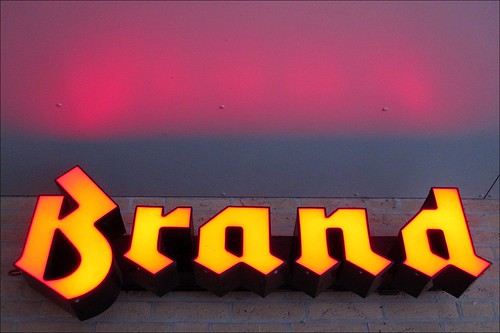
In the marketing presentation by Rob Wells that we referenced a few weeks ago, he talks about branding. (Page through—you’ll see Brandingi n big red letters, then a list of things branding isn’t, then a definition of branding. The next slide is what we’ll talk about.) We know there are dozens of marketing tactics we can use. But if we want to help people understand who we are and what we write, it’s important to think about our tone across media. There are tons of different tones we can strike—Rob lists hysterically funny, literary and erudite, mysterious and intense, folksy and warm, and hip and clever, just to name a few.
That doesn’t mean that every single Facebook page update, Tweet and blog post have to be completely folksy and warm or mysterious and intense. Just like in our books we can mix in a little of a different tone—even if we don’t write romance or humor, there’s often an aspect or subplot of romance or humor in almost every novel.
Which leads to another important question: do you have to match the tone of your books in your marketing? Simple answer: yes and no. The tone of a novel will almost always be different because we don’t generally address the audience, like we must do (or at least consider) in a personal marketing medium.
Appearance
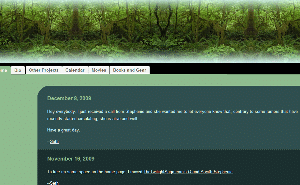
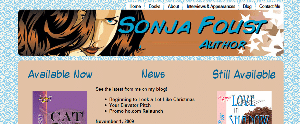
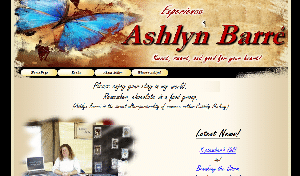
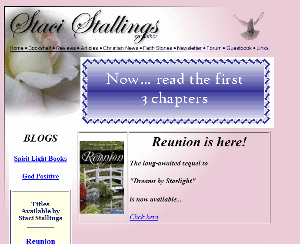
Just like with a book cover, the visual appearance of your blog, Twitter, etc., plays a big role in setting the tone. Generally, the advice that I like is to match your design to your target genre. A dark paranormal author will have a very different design than a historical inspirational romance author.
Web designer Kathleen MacIver also covered this well in our guide to aspiring author websites (PDF).
Name
Yep, you can influence your name—ever heard of a pen name?
We see this most often in cases like J. K. Rowling: she used her initials (okay, her first initial and an invented second initial) because her publisher believed that boys would be less willing to read MG fantasy written by a woman, even with a male protagonist.
But you can also choose your pen name based on other factors: if there’s already an author or other celebrity with your name or something very similar, who you want to be next to on the shelves, hiding your identity (but honestly, this is harder and harder these days).
Make sure you’re consistent across platforms. It’s easiest to make your website/blog YOURNAME.com, but you also want to think about your Facebook page (your name, perhaps with “author” at the beginning or end), your Twitter handle, etc.
Tag line
I don’t think an a tagline is an absolute must, but it can be a nice thing to have to help signal to your visitors what kind of books you write. The tagline should be more about the type of books you write, or maybe the thing that sets you apart—your USP—in the genre rather than a single book you’re working on or that’s coming out most recently.
Vince Mooney offers some good advice on author branding & author tags, including these basic principles:
1. a tag line should reflect and support the author’s chosen brand.
2. a tag line should be original and not too much like another author’s.
3. a tag line should be memorable and intuitively attachable to that author. (By this I mean a reader might reasonably be expected pick the author’s tag line from a list of tags without ever having read one of the author’s books.)
4. a tag line should promise a benefit just as an advertising headline should promise benefits.
I have a few more general ideas on branding you can read here.
The bottom line
In his marketing presentation, Rob Wells covers the most important reason for branding very well. Studies have shown that Coke branding messages light up the brains of Pepsi drinkers just as effectively, and that the exact same drink served with expensive trappings is considered worth more money. By working to build a quality brand, by considering the perceptions of your audience, you can create that kind of emotional response, loyalty and perceived value in the minds of your potential customers.
What do you think? How do you see authors branding well?
Image credits: brand logos via Adam Crowe; Brand by Rupert Ganzer


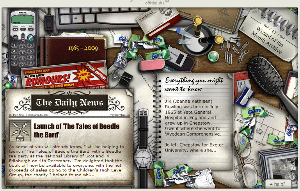
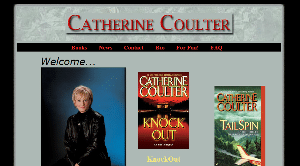

 In some ways, however, a lifestyle blog can be even better than a writing blog. You don’t have to make the switch from writing about writing for writers—you already have a niche. You obviously already have a community around your blog, and your future readers can join in this community.
 Sometimes you can get these things together. Blogger, for example, will give you everything—your domain is whatever.blogspot.com, Blogger stores your pages and files, and Blogger software generates your HTML code and provides the software that lets you maintain your site.
  You can use WordPress.com (and you can get a WordPress.com blog to show up at YourDomain.com, too, but it’s not free like it is on Blogger)—or you can use WordPress.org. It’s the same software, but with WordPress.org you can customize your blog however you want.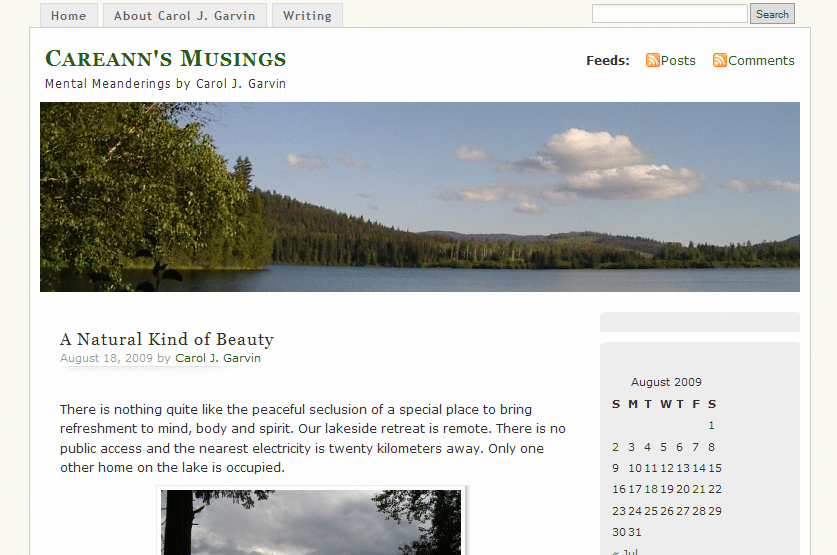
 something quirky, like writers who love yellow or writers who love to go barefoot. Of course you’d welcome writers (and readers) who love pink a little more than yellow, or writers who really don’t go barefoot all that often . . . but just the fact that it’s got this “grabby” idea will make your visitors more interested, and also make your blog stick in their minds a little more.
 Finally, I just want to reiterate what Kathleen said about using a niche approach to blogging. Working to appeal to a specific, if narrow, audience can help to grow your blog more than trying to appeal to everyone. This is just like fiction—we don’t expect that everyone will love everything we write (well, okay, we do, but we don’t reasonably expect that 😉 ). We know that we have to write to our audience—our niche, our genre.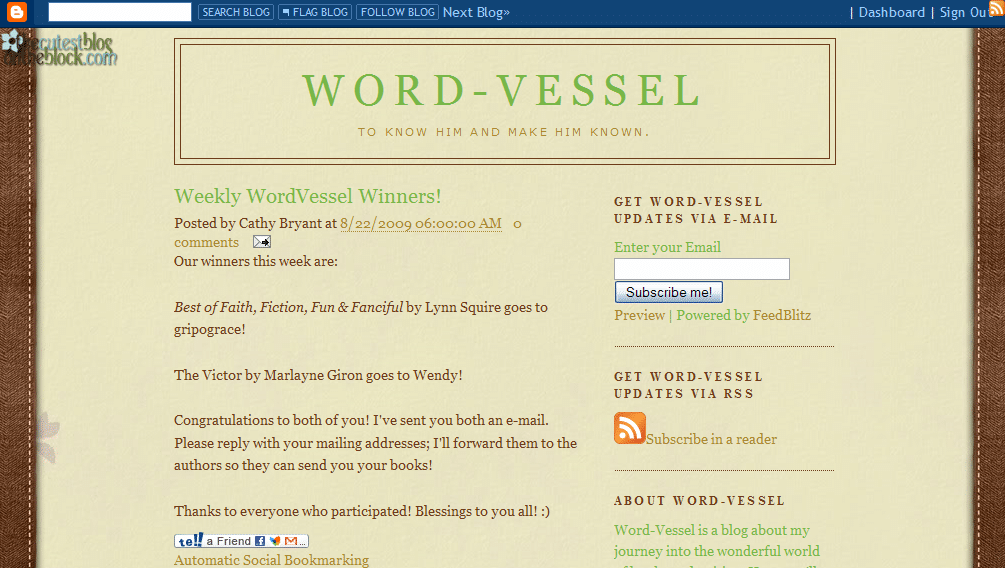

 reflect writing, but to me (and probably other Christians who would be interested in your blog), Word meant the Bible, which doesn’t have anything to do with your writing. You want both . . . both the Christianity that your blog definitely reflects, and the fact that YOU write fiction (or non-fiction, whichever). Another option would be to find/make/have made a header image that uses images to portray some of this. ie: a cross would tell people this is a Christian blog, a pen and paper would portray writing, a stack of books would portray books. You’d just want to make sure the image is as well-done and tasteful as your background image is. Otherwise you’re better off sticking with text.
 Bing . . . sigh. Why, Bing, why? We’re right here! Look us in the eyes! Yeah, they got nothing. Not even close.