All posts by Jordan

The Top 7 Things Every Aspiring Author’s Website Must Have

This entry is part 1 of 4 in the series Marketing: Websites

We are moving on to marketing tactics! We’ll start off by talking about author websites. This post originally appeared as a guest post on Nathan Bransford‘s blog as part of his first-ever guest post contest in July 2009. I’ve refined it a little bit.

Once upon a time, my day job involved learning how to get the most out of your website—and how to make your website work for your visitors. So from the perspective of Internet marketing, here are the top seven things every aspiring author’s website should have.

7. A blog. All right, all right. I’m a little partial to blogs, but not everyone likes blogs or is good at blogging. And that’s okay. If you want to call it an “announcements” section, or call it your “articles,” that’s fine. But do have at least one section of your site where you can post your news—anything from finishing your latest work in progress to selling a short story. This is also a great place to start gathering a following, especially if you like to connect with other people, share your research and discuss the process of writing.

Free advice: If you already have a blog, you can integrate it with your website. Check out Blogger’s Custom Domain feature and host it at http://blog.YOURWEBSITE.com to make sure everyone linking to you is pointing those links to your domain.

6. Social media. This doesn’t mean you need to run out and join every social networking site you’ve never heard of. But it’s always a good idea to give your website visitors potential ways to connect with you. So if you’re already on MySpace, Facebook or Twitter, or any other large social network, list those somewhere on your site—somewhere easy to find.

5. Search engine presence. Unless your name is John Doe or Mary Smith, it should be fairly easy to find your website by searching for your name in the major search engines (Google, Yahoo and Bing). One good way to start with this is to buy YourName.com. If YourName.com (and YourName.net and YourName.org) is taken, experiment with middle initials, maiden names, hyphens, etc. Still nothing? Maybe you should consider a pen name that would be easier for your readers to remember, too.

Free advice: If you have some competition for your name in search results, put in a little extra legwork to find places to get links back to your site, especially from related sites—guest blogging, article writing, etc. I mean, we are writers here, aren’t we?

4. Professional design. For real. This doesn’t mean you need to run out and hire a $10,000 website designer, or that your website has to look as awesome as J.K. Rowling’s. You don’t have to dress like a fashion model to pitch to an agent at a conference.

At the same time, you’re not going to wear your ratty jeans and torn up tank top to a business meeting. Just like your nice pleated khakis, your website needs to look professional: clean, polished, easy to read (spell checked!), easy to navigate. Make it easy for your visitors to find the important stuff on your website (see #1, 2, 3, and 7, at least).

3. An about page. Most of us have an urge to list our friends, spouses, pets, children, favorite television shows, other hobbies, and small collectibles in our query letter. Hopefully, if you’re reading Nathan’s blog, you’ll forbear and omit this paragraph from your query. But your website about page is exactly where you should put all that information. After all, if someone visiting your website wants to know more about you, why not tell them?

2. Your work. No, you probably shouldn’t slap your whole manuscript on your website. But you should at least have a short summary of your work on your site. You might also consider a short excerpt—a chapter or less—in addition to your extremely engaging summary. After all, if your work is ready to query, it’s ready to show, isn’t it? This is also a good place to put your writing credentials (if not under #3 already).
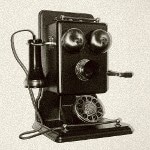
telephone1. A contact page. You’d be amazed how often both aspiring and published authors forget (or don’t want) to give their website visitors a way to contact them. Now, odds are low that a literary agent, editor or publisher is going to use your contact page to send you a desperate “Please, please, work with me! Your brilliance makes me cower in inferiority, but I cannot bear the thought of anyone else tainting your work!” note—but there’s always the possibility.

Free advice: Use a simple web form instead of listing your email address to avoid spam email harvesters.

What do you think? What else should an aspiring author have on his/her website?

Photo credits: Microphone—RAWKUS; binoculars—Joël Dietlé; telephone—Maria Li

March thinky links

It’s the second edition of Thinky Links! Wherein I share a bunch of articles and features that have made me think lately.

I don’t think I’ve mentioned this here before, but I have a problem with the usual, chapter-a-week critique group format. I’ve taken chapters through that format, and while the chapters themselves get better, it’s like putting lipstick on a three-legged pig. The thing needs a prosthetic, not make up. Kristin Lamb has a new approach to the traditional critique group with a Concept critique. (I love the idea, but shudder at the thought of writing out 75 pages of outlines before I begin.) This inspired my fledgling critique group to totally change up our format—and so far, it works! Now if only we could get our schedules to do the same.

I’ve mentioned a couple of Vince Mooney’s points on book marketing, but he also has some fun lists on his blog, including more than 100 nonverbal cues, 200 triggers for creating emotional responses, 100 ways a character might grow in the course of a romance and how to show it and more. While every one of these suggestions obviously won’t work for every character, hopefully there will be something to jog your imagination and personalize your character.

Want to inject more humor into your writing? Author Julie Lessman posts at Seekerville about the whys and hows of humor even in non-comedic novels.

Every week, author Julie Coulter Bellon offers a free first page critique from an anonymous national editor. Interested? Here are the guidelines:

Want your first page critiqued by a national editor? Submit your double-spaced, 12 point font, first manuscript page to juliecoulterbellon@gmail.com with First Page Friday in the subject line. Ms. Shreditor and Angela Eschler critique every Friday. (Please no swearing or explicit sex scenes).

In February, author Kathi Oram Peterson devoted the month to writing about faith—specifically, having faith in yourself and your writing. If your faith is flagging, check out her posts!

Every time I go to author Jody Hedlund’s blog, I read pretty much everything I get my hands on. Most recently, I really liked her articles on time management for busy writers (from a home-schooling mom of 5 and published author!), how to make more time for blogging (and writing), living intentionally but with breathing space (on time management and meeting goals). Apparently my subconscious is worried about something. . . .

Which of these links makes you think? What other great articles have you read lately?

Some fun news!

Hey folks! In case you missed it yesterday, I put out my first PDF writing guide in years, this time on emotion. And my friend and new critique partner, author Julie Coulter Bellon, featured me and my writing guides on her blog today. And man, am I blushing after all the nice things she said. Thanks, Julie!

Also today, it’s the first of March, in case you didn’t notice. That means it’s time for the first ever AI MARCH-A-THON!

!I’m part of the executive committee of a writing community called Authors Incognito (our one and only membership requirement: have attended an LDStorymakers Conference). And this month, we’re setting the bar really high for ourselves. We’re shooting for a Nano-style “31 days of going for the gold”—only instead of 50,000 words, we can set whatever writing-related goals we want.

You don’t have to be a member of AI to join in—come post your goals now and work together with us!

So I dreamed big. I’m already afraid I dreamed too big. But I’m hoping to finish revisions on one book (1/3 of the way through now), read one book, and write one book.

Yeah, a whole one.

See what I mean?

And I’m going to keep up the blog? Oy.

Diving back into my revisions!

New PDF Guide: Emotion: it’s tough

This entry is part 14 of 14 in the series Emotion: it's tough

When I figured out which series were the tops in 2011, I suddenly realized how long it’s been since I put together one of my series into PDF format (hint: years). Plus, it’s my husband’s and my second anniversary of our first kiss. I wanted to celebrate, but I can’t really take you all to dinner. So I made you something instead. (Ten guesses what it is!)

I’m starting with the most popular of last year’s series: Emotion: it’s tough. Portraying emotion in fiction isn’t easy—but an emotional experience is exactly why readers buy and read books. Using that emotion makes your writing more powerful—when it’s done right.

Emotion might be a double black diamond ski slope, but it doesn’t have to be treacherous terrain in your writing. Hard work, perhaps always. But impossible? Nope!

So check out the free PDF version of the series Emotion: it’s tough!

More free PDF writing guides.

Photo by Peter Dutton

Marketing 101: Marketing Q&A

This entry is part 8 of 8 in the series Marketing 101

Hey there! Did you see I added a Facebook page? Check out the box in the sidebar, or just head on over to like me (please)!

We’ve gone through the very basic levels of marketing 101 so far in this series—but I know there’s a lot more in this area to cover, and I’m sure you have questions.

So today is question day!

If you have anything else you want to understand about branding, marketing strategy, tailoring your marketing strategy to you, or what marketing is, now is the time to ask!

But don’t worry, Marketing Mondays aren’t going away. Next week, we’ll start in on our first series on Marketing Tactics!

So, what else do you want to know about marketing?

Photo by Svilen Mushkatov

Plot Driven vs. Character Driven: I do not think it means what you think it means.

Want to learn more about plotting or creating effective character journeys? Check out my free writing guides!

When I first heard the terms “plot driven” and “character driven,” I immediately wanted to classify my work as the latter. The term “plot driven” makes it sound like our characters are jerked around without motivations or any other reasons save it be that “I, the author, need you do to such-and-such.”

That’s not my story, we claim. In my story, the characters are the driving force. They make the decisions (based on the motivations which I carefully crafted for them) that bring to pass those plot action. They are more than just cookie cutter cardboard characters who get jerked around like marionettes.

This usage is so common that I feel bad for imposing the prescriptivist label of “wrong” on it, but I want to note that there are more than one way that these terms are used, and if you’re using these terms, it’s really important to understand how other people are using these terms.

At Edittorrent a couple years ago, editor Theresa Stevens defines these terms—and reminds us that they’re not mutually exclusive:

Most writers use both character and plot to drive the story forward. Keep that in mind as we go through the ideas in this post. It’s not an either/or. It’s a sometimes this/sometimes that/sometimes a blend of both.

In the simplest form, here are two definitions.

Character-driven: When something about the character’s essential self leads to a particular action or event in the story.

Plot-driven: When a character takes a particular action so that the result is a particular plot point.

(A little too abstract? Theresa gives a good example in the post.)

These definitions work on a macro level as well. When the basic story is driving toward a particular event or plot outcome, that’s technically plot-driven. When the basic story is more about the character’s internal growth and change, that’s technically character-driven.

Many genres of fiction, including mysteries, thrillers and romance, are inherently plot-driven. There is a set outcome: finding and stopping the bad guy, happily ever after, whatever. There is a perscribed plot formula—and if you violate it, writer beware.

However, as Theresa notes later in the article, these formulaic genres also have a specialized use of these terms. In romance, for example, there is both an internal plot (the romance) and usually an external plot (which might be a mystery or basically any other type of story). These plots influence one another an interact.

The internal plot, the romance, has a set outcome: happily ever after—like a plot-driven story. But the plot itself has more to do with the character’s inherent attributes, growth and change than about specific events and actions, like a character-driven story.

Conversely, the external plot, often does not have a set outcome: can they fix up this old hotel? Can they win over his domineering invalid mother? Can they overcome their business rivalry—or might they both lose/quit their jobs? This plot line is driven by events, making it plot-driven. But without a set outcome, it may or may not ultimately be a plot-driven storyline.

Confusing enough for you?

The bottom line, however, comes straight from Theresa:

Now, you’re probably wondering why this matters. Who cares if your story is plot-driven or character-driven? The truth is that the technique will not show in the final manuscript. When I read a book, I can’t tell if they started with a character or an event. And I shouldn’t be able to.

You can start with a character and generate events that suit him or her (as long as those events eventually become a coherent plot). Or you can start with plot and generate a character that suits it (as long as that character eventually becomes a consistent, rounded person). But whichever you use, the end product should most likely have both external plot and internal conflict and growth—coherent plot and rounded characters, character growth and motivated events.

(Important exception: literary fiction may be external plot optional . . . but this may or may not be why literary fiction gets a bad rap from time to time. However, character-driven plots are usually the most important aspect in literary fiction, tracking a character’s emotional journey and change.)

Want to learn more about plotting or creating effective character journeys? Check out my free writing guides!

What do you think? Do you start with plot or character? Can you tell what others start with?

Photo credits: marionette & puppeteer: Asian Art Museum; dash & wheel—Ted Fu; steam engine drive shaft—Matthew Hine

Making scenes matter

or, How to Save Your Darlings!

We’ve all heard the phrase “Kill your darlings,” right? While sometimes, it feels like the injunction means that we have to carve out anything we liked in our work—whoa, don’t do that! “Kill your darlings” means more to carve out the pieces of your story that are important only to you—if they don’t matter to your characters, your story and your readers, they shouldn’t be in there, no matter how delightful their dinner discussion might be.

Janice Hardy has a great article on “Poking Dead Scenes With A Stick,” AKA do you really need that scene. She says:

When you have a dead scene, ask yourself: If I cut this scene, would anyone but me care or even notice?

If the answer is no, cut the scene. Go ahead and move it to a new file called "cut scenes" and save in case you need it later if you’d like. Be ruthless, the story will be better for it.

She has some great criteria for determining whether or not your scene is truly necessary. There might be events, statements or actions in the scene that are important, but you might be able to move them to another scene if you really need them.

But sometimes, we really do need these scenes. Perhaps they contain clues/foreshadowing that won’t work any other place. (But here’s a hint: if that clue is the only reason we need the scene, it’s probably going to stand out to the reader—maybe a little too much—unless we can make the rest of the scene work harder.)

So if we really need to keep a scene, what do we do to make that scene matter? To understand that, let’s take a look at the purposes of scenes.

Mission of scenes

On the Writing on the Wall blog, author Annette Lyon lists six of the most basic purposes of a scene:

  1. Advance the plot
  2. Create or show conflict
  3. Set the setting
  4. Reveal character
  5. Show backstory
  6. Lay groundwork for later plot

Numbers 1 and 2 are probably the most important in any sort of commercial or popular fiction. In fact, Annette says that most of your scenes should have #1 or #2 as a purpose—in addition to one of the other six.

To repeat, nearly every scene should advance the plot and/or create/show conflict, in addition to developing another aspect of the story. A scene just for character development isn’t enough of a purpose.

Look carefully at the scene in question and determine if it’s mostly or entirely serving only one of these purposes—and if it’s serving #1 and/or #2 at all.

So, let’s say you’ve gone through the scene line by line and you’ve determined that there is absolutely no other way to convey this information—but the scene still isn’t doing enough. You need to make that scene matter.

Making scenes matter

When you truly cannot cut the scene, what do you do? You make the scene matter.

First of all, look at the list of scene purposes above (and add to it if you really need to). How can you add those purposes to your scene?

When I’m trying to make a scene matter, I ask myself these questions:

  • What is the character’s goal for this scene?
  • How can things get worse?
  • How can I raise the stakes?
  • What is the source of conflict in this scene and how can I make the conflict bigger?
  • How can I weave in the antagonist, the plot, a subplot or a character turning point?
  • Who is the worst person who could walk in right now?
  • What would happen if this scene took place somewhere else?
  • What is the character feeling and have I shown it enough on the page?

In a second post on this topic, Janice Hardy also offers a list of things to look at to help make your scenes matter (and there’s some overlap, but I wrote out my mental list after reading her first post):

  • What is your protag doing?
  • Where does this scene take place (setting)?
  • Who else is in the scene?
  • Where structurally does this scene take place (act one, midpoint, act two, etc)?
  • What happens right before this scene?
  • What happens right after this scene?
  • What’s your theme?
  • What are the stakes?

With all these questions, mine and hers, we want to look for ways to make the scene more integral to the story. Incorporate the themes or the subplots more, heighten the conflict and the suspense, etc.

When I was rewriting the book that will be my first published novel, I knew I needed to amp up the mystery plot (and tone down the romance plot a bit). So I went through each scene, specifically looking for a way I could increase the tension and suspense, raise the stakes and bring in the antagonists more.

And you know what? Even though I’ve written four books since that one, I still have to do this. Last month I did the first revision on my most recent manuscript, and I had to look for ways to make the scenes more interesting, state the characters’ goals and tie in the suspense more.

For a more specific example, in the last week, I reread a book I wrote almost 3 years ago as the first step in revisions. I’ve already edited it a bit, so just about all of the scenes are in there for a good reason (though I can see I hadn’t really grasped scene goals at the time). However, some sections of the book really drag, so I’m still brainstorming how I can draw in the antagonist more, how I can keep the threat present and how I can raise the stakes.

One really good example I’d like to share, though, is at a major turning point of the book. It’s the midpoint. Things are looking pretty bad for the future of the romance, and the hero goes home and basically mopes. (It’s my own writing; I can be harsh if I want to.)

This is the midpoint of the book, a major turning point. After the midpoint, says Larry Brooks, the character is ready to go on the offensive. The third quarter is all about the attack. But my character basically rolled over and played dead after the midpoint.

When I reread my midpoint scene, I thought, “NO! He does not MOPE! HE WILL FIGHT!” (If you feel like either quoting The Incredibles or singing some Peter Cetera, feel free.) And suddenly the entire third quarter made sense. I still have a lot of work to do to implement these changes, but suddenly this scene matters so much more.

In my example, yet another scene of the hero mourning his losses didn’t add anything to the story, except that we found out he’d gone so far as to buy an engagement ring before they broke up. (This does not help to make him less mopey, LOL.) In my new vision for the scene, we’ll still get that information—which wasn’t vital to the story in the original version. But now, that ring (which will actually be offstage), plus the events of the day, will help my character to a turning point.

And I can’t wait to see him fight.

What do you think? How do you help to make scenes that aren’t doing a lot for your story really integral?

Photo credits: delete—Mixy Lorenzo;
question mark—Alexander Drachmann; sad sack baby—J

Marketing 101: Author Branding

This entry is part 7 of 8 in the series Marketing 101

What is branding?
When we think about branding, it’s easy to think of all the work that companies like Coca-Cola or Pepsi put into their logos, commercials and jingles. And the American Marketing Association does use “Name, term, design, symbol, or any other feature that identifies one seller’s good or service as distinct from those of other sellers” in the definition. While that’s definitely a part of it, the true definition of a brand is:

the sum total of all the interactions, impressions, information and expectations within the minds of people associated with a person, product, company or name.

It’s important to remember that branding isn’t just something we do on our blogs and Twitter accounts: it resides in the minds of other people. That’s not to say we don’t have any influence on our brands—of course we do. But if we don’t take charge of our brands, we won’t be able to make the impressions that we’re looking for on our blog readers, book readers and the rest of the public.

So let’s look at a few aspects of branding that authors can influence!

Tone
I hope most authors are familiar with tone from their writing: for highly dramatic scenes, we make sure our language matches the scene—we don’t use “poopyface” as an insult in an intense scene in a novel for adults (unless we really want to mess with the tension for comedic effect).

In the marketing presentation by Rob Wells that we referenced a few weeks ago, he talks about branding. (Page through—you’ll see Brandingi n big red letters, then a list of things branding isn’t, then a definition of branding. The next slide is what we’ll talk about.) We know there are dozens of marketing tactics we can use. But if we want to help people understand who we are and what we write, it’s important to think about our tone across media. There are tons of different tones we can strike—Rob lists hysterically funny, literary and erudite, mysterious and intense, folksy and warm, and hip and clever, just to name a few.

That doesn’t mean that every single Facebook page update, Tweet and blog post have to be completely folksy and warm or mysterious and intense. Just like in our books we can mix in a little of a different tone—even if we don’t write romance or humor, there’s often an aspect or subplot of romance or humor in almost every novel.

Which leads to another important question: do you have to match the tone of your books in your marketing? Simple answer: yes and no. The tone of a novel will almost always be different because we don’t generally address the audience, like we must do (or at least consider) in a personal marketing medium.

Appearance
Just like with a book cover, the visual appearance of your blog, Twitter, etc., plays a big role in setting the tone. Generally, the advice that I like is to match your design to your target genre. A dark paranormal author will have a very different design than a historical inspirational romance author.

Web designer Kathleen MacIver also covered this well in our guide to aspiring author websites (PDF).


Name
Yep, you can influence your name—ever heard of a pen name?

We see this most often in cases like J. K. Rowling: she used her initials (okay, her first initial and an invented second initial) because her publisher believed that boys would be less willing to read MG fantasy written by a woman, even with a male protagonist.

But you can also choose your pen name based on other factors: if there’s already an author or other celebrity with your name or something very similar, who you want to be next to on the shelves, hiding your identity (but honestly, this is harder and harder these days).

Make sure you’re consistent across platforms. It’s easiest to make your website/blog YOURNAME.com, but you also want to think about your Facebook page (your name, perhaps with “author” at the beginning or end), your Twitter handle, etc.

Tag line
I don’t think an a tagline is an absolute must, but it can be a nice thing to have to help signal to your visitors what kind of books you write. The tagline should be more about the type of books you write, or maybe the thing that sets you apart—your USP—in the genre rather than a single book you’re working on or that’s coming out most recently.

Vince Mooney offers some good advice on author branding & author tags, including these basic principles:

1. a tag line should reflect and support the author’s chosen brand.

2. a tag line should be original and not too much like another author’s.

3. a tag line should be memorable and intuitively attachable to that author. (By this I mean a reader might reasonably be expected pick the author’s tag line from a list of tags without ever having read one of the author’s books.)

4. a tag line should promise a benefit just as an advertising headline should promise benefits.

I have a few more general ideas on branding you can read here.

The bottom line
In his marketing presentation, Rob Wells covers the most important reason for branding very well. Studies have shown that Coke branding messages light up the brains of Pepsi drinkers just as effectively, and that the exact same drink served with expensive trappings is considered worth more money. By working to build a quality brand, by considering the perceptions of your audience, you can create that kind of emotional response, loyalty and perceived value in the minds of your potential customers.

What do you think? How do you see authors branding well?

Image credits: brand logos via Adam Crowe; Brand by Rupert Ganzer