So I’m undertaking a major reading project right now, since I don’t want to push myself to write in the midst of some other project. (What was it again? Oh yeah, Operation Make-Rachel-Stop-Crying. It’s a full time job.) I picked probably twenty or so books that have been nominated for various awards in my genre or published by my target presses (and that were available at my library) and have plowed my way through several.
But not all. Maybe I’ve gotten a little burnt out on reading (is that possible?), but in the last week or two, I’ve suddenly had a hard time sticking to a book. This week, I tried two novels where the writing was so bad, I had to skip half the book or more. (I still wanted to know how it ended, though that was at least partially so I’d never be tempted to pick up the book again.) Telling vs. showing was the main problem. I said it was like the author was standing in front of me, holding up a curtain as he dictated the action on the other side.
Although bad writing is always a turn off, it’s not always enough to make me give up on a book, or at least half of it. Some of the books I just couldn’t not put down lost me in character soup. In one case, the story was told from one character’s POV, but by the end of the first chapter, we’d met so many people I couldn’t remember which character that was. And I kept forgetting in subsequent chapters.
I think it all boiled down to a basic factor: I just couldn’t get involved in the characters. Something about the narration style (telling) was too distant or confusing for me to make an emotional connection and sympathize with characters. And I’m realizing that life’s too short for boring books (or boring novels, anyway), so I’m not willing to persevere through a hundred pages to see if I suddenly start liking a character.
(And since life’s too short for boring books, I’d better work twice as hard to make sure mine aren’t boring!)
What do you think? What makes you put down a book?
We’ve talked about how to get into a character’s head here before, and it seems most of us discover our characters along the way, but the perennial question came up recently on one of my writers’ email loops. I especially liked the breadth of the following answer by member John Waverly, reprinted here with his permission (with video and formatting, including emphasis, added).
Call me weird, but I collect things like this. Here’s some of the ideas I’ve collected:
Write a day in their life
This is kinda like [a previously posted] journal idea, but it doesn’t have to be first person. I like starting by describing their name on a nametag. Then zoom out and describe their clothes and their physical characteristics. Then zoom out and describe where they are and why. Who else is there? What do they think about these people? Etc. At some point they leave and go home. Why do they leave? How do they travel? How far do they travel? What do they drive/ride? What do they do in the car? Do they listen to music? Do they sing? Do they get angry? Describe their home. They listen to their voice mail or check their email. What messages do they have? Who are they from? How do they feel about them? Then they go to bed. Describe their nighttime rituals if any. What do they dream about?
Define their possessions
Start writing about the things they own, the things they treasure, the things they want to own and or the things they used to own or the things they would never-in-a-million-years get caught dead with. And why.
Describe their surroundings
This is similar to defining their possessions only in this case you describe where they work and live. Describe their office/desk, kitchen, bedroom, garage, yard, etc.
Write a biography
Pretend you are a biographer and write a story from the person’s life. Pick something the character finds important. You can also do this like a journalist writing an article. In this case, YOU get to pick the topic—a topic that will be interesting to a general audience.
Interview them
Someone already mentioned that they go online and find character questions and interview the character. Another fun thing you can do is to have one of your characters interview the other. Then you can begin to see the relationships between the characters as well. Some of my characters will answer one way if a parent or teacher interviews them and a different way if their best friend (or a romantic interest) interviews them.
Brainstorming
Sit down and type everything you know about the character. When you feel the “flow” has gotten slow, set a timer for 10-15 minutes and keep going, writing anything that pops into your head until the timer goes off. It is sometimes surprising what you come up with once the “well is dry.” After you are done brainstorming, go back and delete all the stuff that doesn’t make sense.
Pictures
Go through magazines or look online for pictures. What does the character look like? Who do they wish they looked like? What do they drive? Where do they live? What do they wear? Where would they like to go on vacation? If you are doing this online, copy the picture into Word and then write a short piece about why the character resonates with that picture.
Real people
Try to think of real people the character reminds you of and see if there is anything in that real person’s personality that you can “borrow” for this character. Make sure to use traits from several different people so the original sources aren’t obvious, especially if you are working on a villain. (Unless it’s me, I’d love to be a villain in your book.)
Bio sheets
There are hundreds of character sheets online. Pick one. Fill it out. This is different than the Interview mentioned above because in an interview you are answering in the character’s voice and point of view. In the bio sheet you are answering as the novelist with an omniscient point of view.
There are some variations on each of the themes, but the ideas I’ve gathered fit into one of these. I would be interested if anyone has found other ideas.
For me, creating a character is a bit different each time, but I get the most mileage out of the first option.
What do you think? Have you tried any of these methods? What are your favorites?
About the author
John Waverly loves to write and is endlessly fascinated by the different ways writers approach the craft.
I’m gearing up to write something new—you know, when life with a new baby and adjusting to three children all settle in. But even the gearing up phase is going slowly, because I’m feeling like I have to get to know the main character inside and out before I start writing. Before, we’ve looked at creating sympathetic characters, but now I’m just thinking about creating characters themselves.
I know some people do just that—spend hours, days or even months designing a character and bringing him or her to life, tweaking every last nuance of his or her backstory, weaving it into the plot outline, crafting quirks, homing in on weaknesses—all before they start writing a word of the first draft.
And then there are people like me, who outline characters in broad strokes and then launch into a draft. I edit and add to my characters’ life stories as I draft—and often don’t actually create those histories until I have something come to me in a stroke of genius, which usually requires some rewriting of the draft to that point.
Then I get to the end of the draft and have these characters that have evolved over the course of the draft. Even their voices have developed and been refined, until at the end of the draft, they have more distinctive voices, and going back to the beginning, I find bland, voiceless narration.
“Fixing” all that, and further refining and defining my characters, can be a lot of work. That’s part of the reason I wanted to try to get all that figured out in advance. And while I’ve definitely worked to develop my new character, her life story and her personality (with some ideas from The Power of Point of View by Alicia Rasley), I’ll find most of who she is and how she sounds in the writing, and for me, can’t be found any other way.
When do you do most of your character crafting—before, during or after drafting? What are your favorite ways to get to know your characters? (Warning: awesome responses to the second question just might be “foreblogged”!)
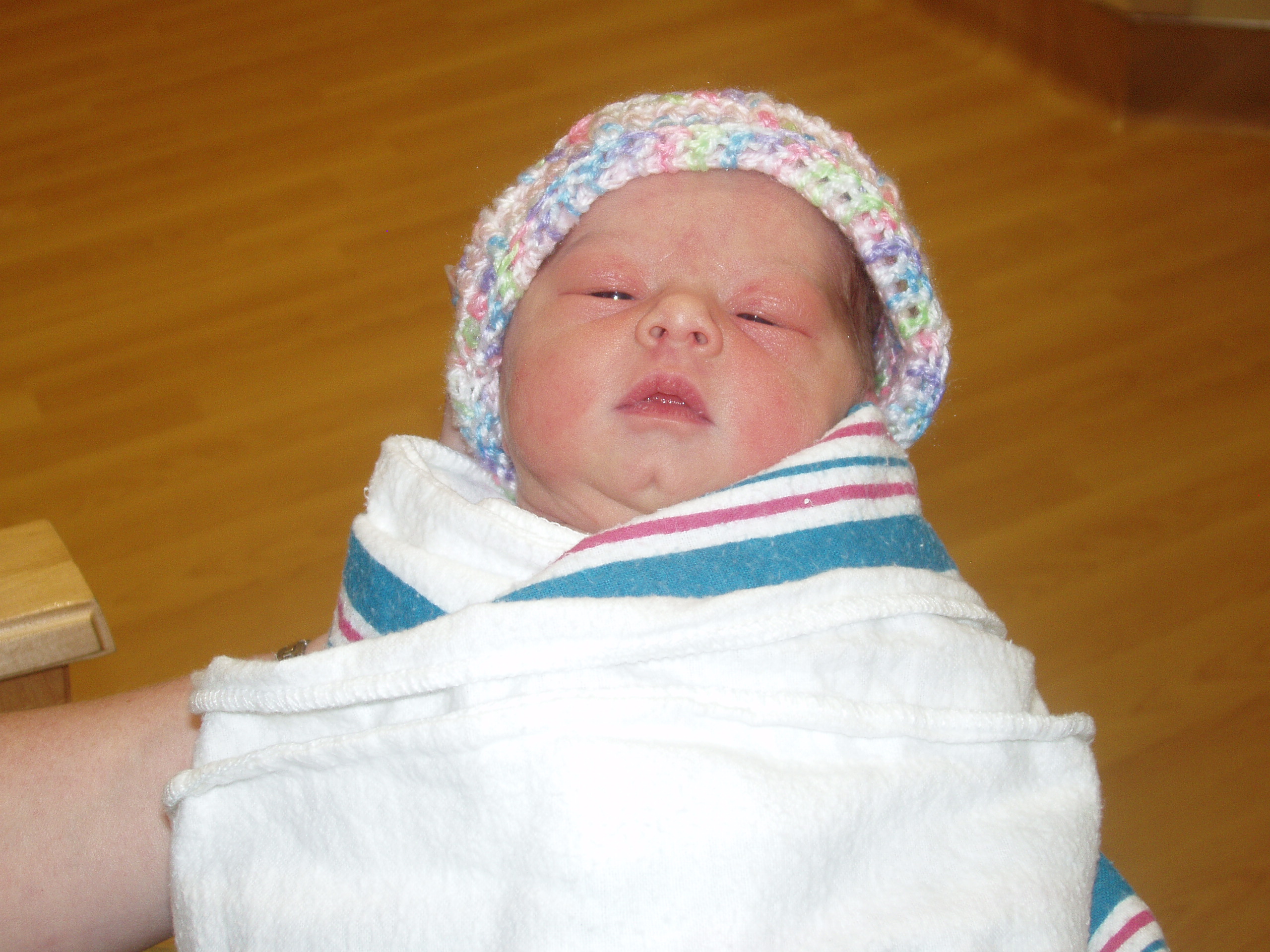
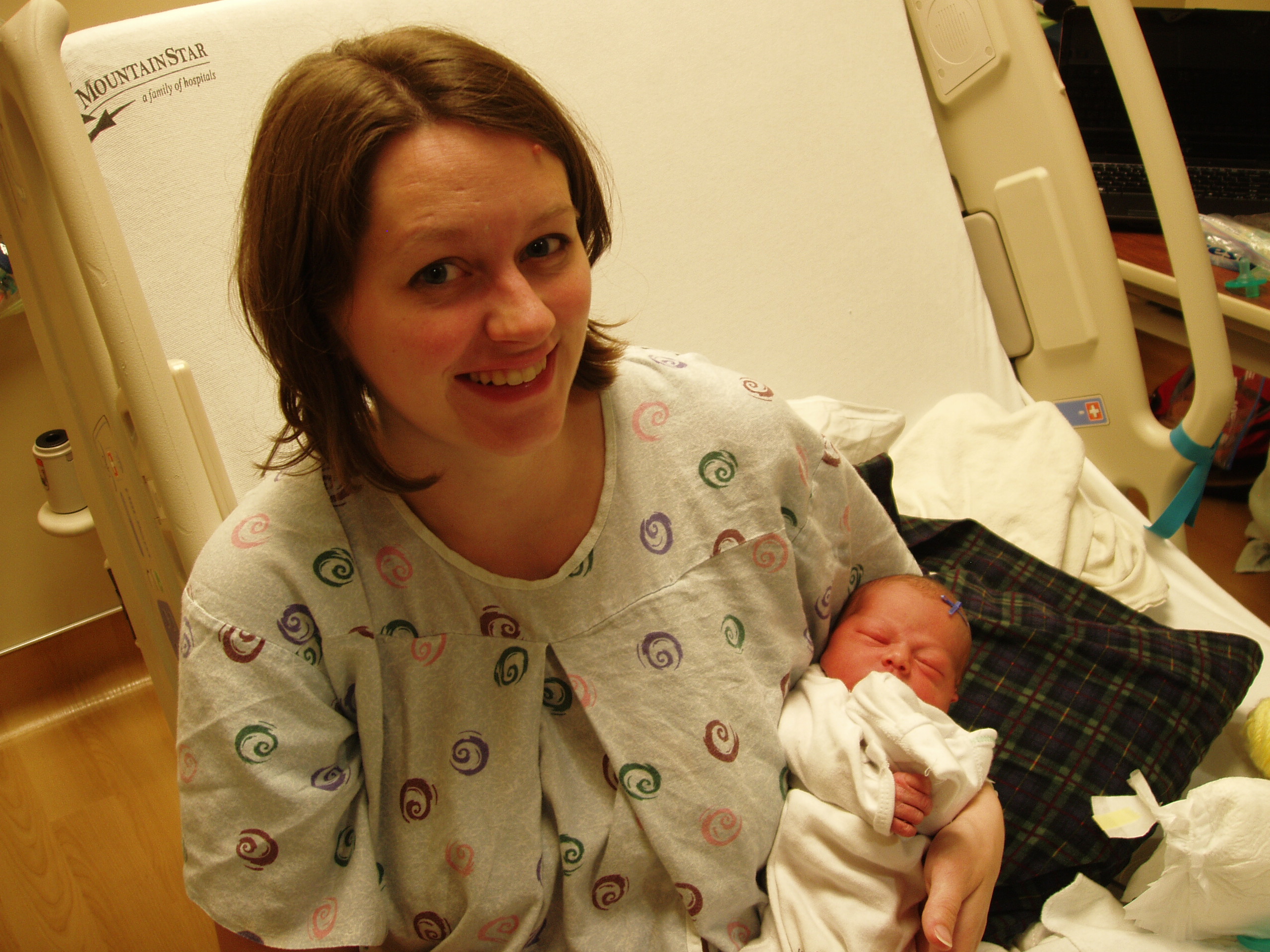
I’ve had a secret WIP in progress for several months, and now she’s ready to share:
Rachel Diana
5 June 6 lbs 9 oz
Blogging may be spotty for the next little while, but we’re all doing well. (And no, you didn’t miss anything—I was saving this as a surprise for the Internetz. Oh, and as a reminder: this is #3 for us.)
To round up our week of inspiration, I thought it’d be nice to have the chance to share what you’re good at. Come on, you know there’s some aspect of writing that you’re pretty good at. You can claim that your critique partners say it’s good, or you can say that you’re pretty good at it on the second draft (first drafts don’t count here anyway), if you feel like it’s boasting, or you can qualify it with what you’re not so good at yet.
Personally, I’m pretty good at dialogue—or so I’m told. (I know a couple things I can work on in that area, of course, but “good” doesn’t mean “perfect on the first draft.”)
I love writing. I have loved writing for most of my life. But when it comes to pursuing publication, love is not enough.
Love can help you to write every day (if that’s how you work). Love can help you to learn more. Love can make the world a happy, rosy place—remember when you were in love the first time, or when you first fell for the person you’re with now? Everything feels happy and skippy and you just know you’ll be together forever because you’ve got the right one (baby. Uh huh.).
You can love writing, and write every day—and if that’s what you want to do, great! If that makes you happy, you are a lucky, lucky person. Go forth, write and be happy (and never, never submit for publication. The rejection would make you sad, and if writing for yourself is enough, don’t taint that.).
This is where you switch from having a hobby to being a writer. The mind-numbing, hour-after-hour, please-I-don’t-want-to-do-this-anymore-let’s-just-watch-Arrested-Development-on-DVD-instead, how-on-earth-is-writing-this-much-work stage. Anyone can write a book. Everyone who wants to should. But it’s only when you put in the work (and make the sacrifices, and give up your social life and your sanity and occasionally lower your personal grooming standard) to take something that was fun and make it into something that is good that I think you cross from being a hobbyist to being a writer.
Writing is WORK. The best work, sure, but work nonetheless.
To use our love analogy again, let’s say you get married—and then comes reality. Suddenly, the pure euphoria of being together everysecondofeveryday isn’t there. You have an argument. You yell at each other. You don’t feel that overpowering high in his/her presence.
Suddenly, it takes more than love to keep going. It takes commitment. And it takes work. You keep going because you know the love is there, because you know this person/book is worth it—but love isn’t enough to get you there by itself.
How do you stay committed to your work? How do you cope when your love of writing isn’t enough to keep going?
I’m in an inspirational mood this week. (Or maybe I’m just procrastinating working on my latest round of revisions. I don’t know.)
Sometimes, we all get the “Am-I-crazies?”, as Nathan Bransford calls them. Publishing is a long slog, and sometimes it doesn’t feel like it’s worth it to keep pounding away at that novel that no one might read.
Today we get a story, and it’s not about a writer. Once upon a time, there was a man who decided to become an actor. He did all the requisite things at the time: signed a contract with a studio for bit parts on television, pulled in a regular salary as an extra in mostly non-credited and non-speaking roles. After five years without any real progress, he learned a trade to support his family. But he wasn’t ready to give up on his dream.
His trade brought him into contact with up-and-coming directors—directors who gave him small,but good parts in their films. Each contact, and each role, probably felt like a big break, but after another five years, he was still mostly playing one-off characters who didn’t even warrant a last name on television shows. Still, he wasn’t ready to give up:
I realized early on that success was tied to not giving up. Most people in this business gave up and went on to other things. If you simply didn’t give up, you would outlast the people who came in on the bus with you.
After a decade of trying to make it, one of those up-and-coming directors hired him to read lines with other actors auditioning for parts in his next movie. Eventually, that director came to really like the way our hero interpreted one character in particular, and cast him in the role.
Yeah, the crew thought the film was a B-movie joke at best, some of the cast believed the film would fail, and even our hero thought the film was “weird.” The dialogue sucked (our hero helped improve it). The director didn’t like the style of the cinematographer—or, it seemed, the actors. Production and post-production problems pushed back the release by months. By all accounts, it looked like the movie wouldn’t do much for our hero’s career before it was finally released, 33 years ago yesterday.
You might have heard of the film. Our hero played a guy called Han Solo.
What do you think? What are you favorite inspirational stories or quotations?
Sometimes it just seems like it’ll never happen. The black marks on the page are going to beat you again, and this work will never be publishable. Or even readable. Or you’ve queried and rewritten and queried and rewritten until you don’t even recognize your story anymore, and still no bites. Or you’ve snagged a killer agent and whipped that MS into shape, but no news really isn’t good news.
We all get discouraged sometimes. I was feeling discouraged a few weeks ago, right before I attended a writing conference last month. It was so good to be reminded that perseverance pays off in publishing, as in just about everything else. And here’s the visual reminder they shared at the conference:
Remember: don’t give up! Surrendering to discouragement is the surest way to fail.
What do you think? How do you recharge when you feel discouraged?
 But not all. Maybe I’ve gotten a little burnt out on reading (is that possible?), but in the last week or two, I’ve suddenly had a hard time sticking to a book. This week, I tried two novels where the writing was so bad, I had to skip half the book or more. (I still wanted to know how it ended, though that was at least partially so I’d never be tempted to pick up the book again.) Telling vs. showing was the main problem. I said it was like the author was standing in front of me, holding up a curtain as he dictated the action on the other side.
 I know some people do just that—spend hours, days or even months designing a character and bringing him or her to life, tweaking every last nuance of his or her backstory, weaving it into the plot outline, crafting quirks, homing in on weaknesses—all before they start writing a word of the first draft.